
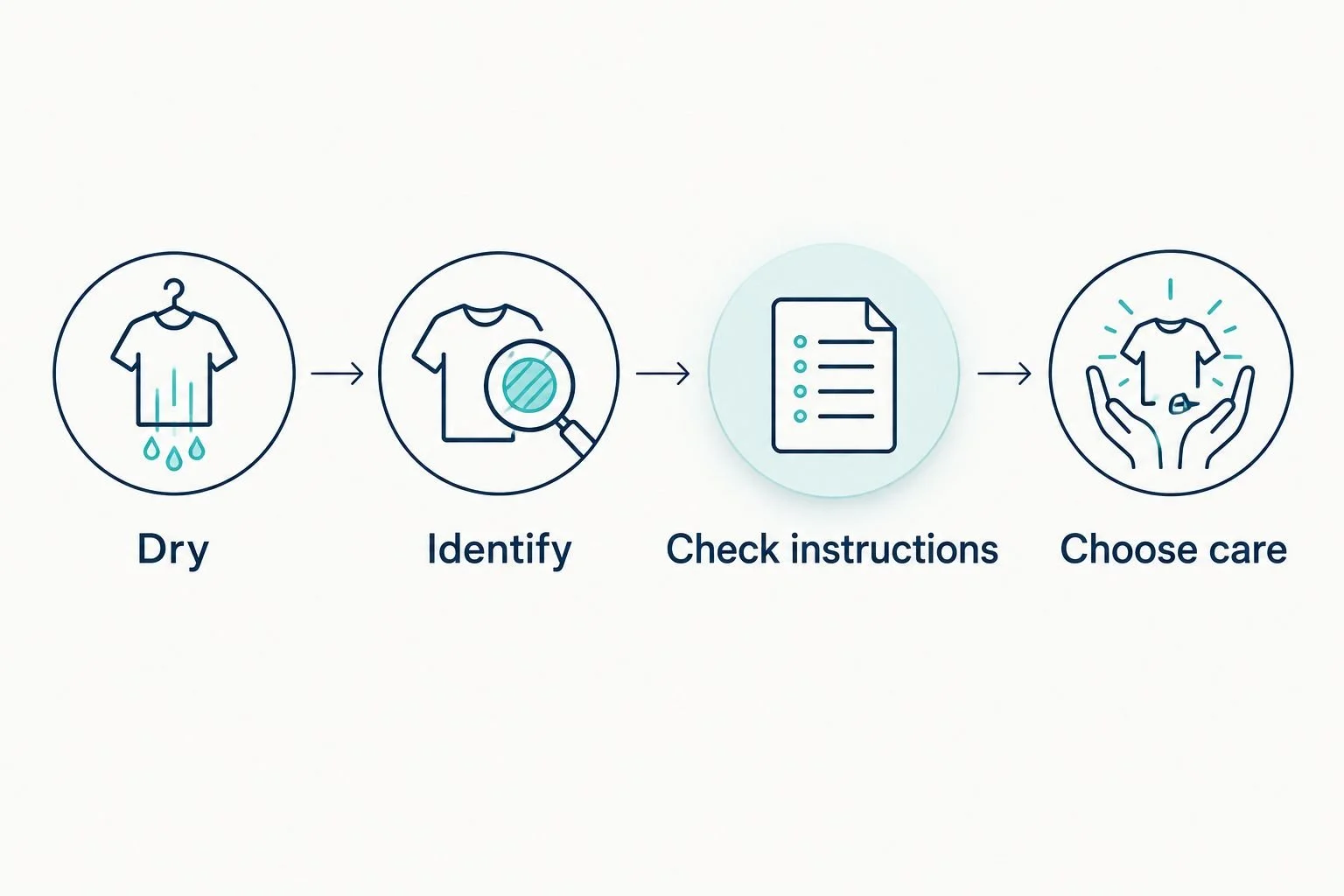
Instead of guessing which dressing belongs on every freshly washed seam, use this RV seal care after exterior wash workflow: dry the area, identify the material, and follow its manufacturer’s care instructions. For Weber County owners, this separates routine cleaning from damage that needs a repair decision before another product goes on.
TL;DR
RV seal care after exterior wash starts with drying and identifying sealant, rubber seals, and exterior finishes.
Trailhead-RV provides mobile RV washing in Weber County; confirm any additional seal-care scope before booking.
Rubber conditioner, seam sealant, and exterior wax serve different purposes and are not interchangeable.
Photograph lifted edges or cracks before treatment; washing and dressing do not repair failed seams.
By Seth Garecht | 2026 owner guide
Why this matters
A clean RV makes dirt easier to distinguish from an actual gap, split, or lifting edge. But a shiny surface does not prove that the joint underneath is watertight. Treat cleaning, seal care, and seam repair as separate jobs.
Trailhead-RV is best for Weber County RV owners seeking mobile washing at their location. The veteran-owned business serves Weber, Davis, and Salt Lake Counties, with Layton as its primary base. Review Trailhead-RV when arranging the wash, then confirm exactly what the appointment includes; do not assume seal inspection, conditioning, or resealing comes with it.
This 2026 workflow focuses on what you can safely document and prepare after washing. It does not replace your RV manufacturer’s maintenance instructions or authorize roof access.
Before you start
Gather the material instructions. Have your RV manual, roof-system information, and any available instructions for installed sealants, window seals, and slide-out seals. Keep clean, nonabrasive cloths and a camera ready. A previous repair can introduce a different material from the original assembly.
Arrange safe access and a suitable site. Work from the ground wherever possible. Do not climb onto a wet roof or assume an RV roof supports foot traffic. For mobile work, confirm property permission, working clearance, utilities, runoff requirements, service availability, and any travel fee before booking.
Resolve the hidden compatibility problem first. Rubber weather seals, cured seam sealant, and roof membrane are different surfaces. A dressing approved for one is not automatically approved for the others. If the material or previous treatment is unknown, leave it untreated until you identify it.
For a wash at a storage space or driveway, use the mobile RV wash preparation guide to organize access questions before scheduling. Do not wait until the technician reaches a locked gate to discuss entry.
Configuration: A dry, documented starting point
Finish the rinse before adding anything. Remove remaining wash residue using the cleaning method approved for the surface. Do not direct a concentrated stream into window edges, vents, or suspect seams to test whether they leak.
Let the assembly dry according to its instructions. Wipe accessible surfaces with an approved cloth, but do not force cloths or tools underneath bonded edges. Water caught in a channel requires attention before treatment; a dry-looking outer face is not enough.
Create a baseline record. For each concern, take 3 photos: an overall view, a close-up, and a view showing its position beside a recognizable feature. These are recommended documentation views, not a diagnostic test.
Record what you can actually see. Write “edge lifted beside rear window,” rather than “roof leak,” unless the cause has been established. Note visible staining, splits, loose material, or interior moisture separately.
Expected result: You have a clean, dry starting point and a location-specific record, without applying a product that could hide the concern.
Start a 2026 seal-care log with the wash date, RV identification, affected location, and photos. Keep repair records alongside it so the next person does not have to guess what was previously applied.
Configuration: Material identification and care choice
The word “seal” covers several parts that need different treatment. Identify the assembly before choosing the next action; appearance alone does not establish chemical compatibility.
Flexible rubber weather seal
Best for: Owners addressing door, window, or slide-out contact seals
Useful role: Cleaning and manufacturer-approved conditioning where specified
Limitation or risk: Conditioner does not close a torn seal or restore a damaged mounting edge
Cured seam sealant
Best for: Owners documenting bonded roof or exterior joints
Useful role: Checking visible condition and following the sealant maker’s maintenance directions
Limitation or risk: Adding material without identifying the existing system risks an incompatible repair
Exterior wax or finish protectant
Best for: Owners caring for a compatible painted or gel-coated panel
Useful role: Finish maintenance when the surface manufacturer permits it
Limitation or risk: It is not a substitute for seam repair and does not belong on every adjacent material
Name the assembly. Record whether you are looking at a flexible weather seal, a bonded seam, or the surrounding exterior finish. Do not label all three “rubber.”
Match the instructions. Use documentation for the actual installed material. If a prior owner changed the sealant or roof coating, the original RV manual alone does not identify the replacement.
Choose care or referral. Continue with routine care only when the material, approved method, and visible condition support it. Stop when you find separation, tearing, unexplained softness, or moisture inside.
Expected result: Each area has a named material and a justified next action. Unknown materials stay on hold rather than receiving a general-purpose coating.
Configuration: Controlled treatment and a clean finish
Read the complete application directions. Check surface preparation, temperature limits, drying requirements, ventilation, and restrictions around adjacent materials. Do not substitute a generic waiting period for the product’s instructions.
Protect neighboring surfaces. Keep treatment off glass, walking surfaces, hardware, and finishes unless the instructions permit contact. Where specified, use a small inconspicuous test area before broader application.
Apply only the approved treatment. Follow the stated application method and amount. Do not assume a heavier coat provides more protection, and do not spread conditioner over a seam that needs repair.
Remove residue as directed. Check for transfer onto neighboring panels or contact surfaces. Do not operate moving assemblies or close treated seals until the relevant directions permit it.
Make a separate completion pass. Compare the area with your starting photos. Record the exact product used, location, date, and any unresolved concern.
Expected result: The intended surface receives its specified care, nearby materials remain clear, and unresolved defects remain documented rather than covered up.
Use 2 separate passes as an organizational rule: one for the approved treatment and one for checking the finished area. This is not a required application count; the product instructions control application. Separating the tasks helps you avoid treating and declaring completion at the same moment.
Configuration: A Weber County mobile-service handoff
Trailhead-RV provides mobile RV washing and detailing in Weber County, including owners arranging work around Ogden, Roy, and West Haven. Mobile convenience means the service comes to your location; it does not remove the need to confirm that the site permits the work.
Send the location and RV details. Include the city, RV type, approximate size, and whether it is at a residence, storage facility, or campground. Describe the surface concern plainly.
Separate the requests. Ask for the exterior wash or detailing scope first. Ask separately whether the specific seal-care task is offered; do not describe an unconfirmed inspection or repair as part of the booking.
Confirm the site conditions. Ask about water and power needs, vehicle access, space around the RV, slide-out position, and property rules for washing and runoff. Obtain permission from the property operator where required.
Confirm the quote details. Verify service availability, included work, exclusions, utilities, and any travel fee. Provide photos before asking whether a particular seam can be addressed.
Expected result: You and the provider agree on the location, access, and actual work before the appointment.
For a 2026 booking, send current photos rather than relying on last season’s condition. If active water entry is present, explain that first and seek appropriate repair guidance instead of treating the appointment as ordinary finish care.
Request a mobile wash quote
Share your Weber County location, RV details, and access conditions. Confirm any seal-care scope separately.
Second workflow: Seal care before slide-out retraction
If your RV has slide-outs, the next operating step changes the handoff. Before retracting them after washing, follow the slide-out system’s instructions and distinguish flexible weather seals from bonded seams around the opening.
Check accessible contact areas. Look for dirt, trapped debris, folds, or visible damage without reaching into pinch points. Keep people clear of the moving assembly.
Confirm the care instructions. Use only treatment specified for that seal material. Do not apply a generic lubricant simply because the surface squeaks or looks dry.
Wait as directed. Follow the treatment and slide-out instructions before operating the mechanism. Stop if a seal is displaced or the assembly behaves abnormally.
Record changes. Note whether the issue existed before washing and whether it remains afterward. Do not repeatedly cycle the slide-out to force a damaged seal into place.
Expected result: The slide-out is prepared according to its instructions, with visible damage separated from ordinary cleaning needs. If you cannot identify the seal material or safely see the problem, leave treatment to an appropriately qualified repair provider.
Troubleshooting
The sealant edge looks lifted after washing
Stop treating that area and photograph it. Cleaning can make an existing edge easier to see, but timing alone does not establish what caused it. Do not push the edge down, coat over it, or use another wash as a leak test; get guidance for the installed sealant system.
A rubber seal feels sticky or leaves residue
Stop adding products. Check what was applied and whether it is approved for that material, then ask the seal or treatment manufacturer for the correct removal method. Do not experiment with stronger solvents on an unidentified seal.
Water remains in a window channel
Consult the window manufacturer’s drainage instructions. Do not plug an opening or cover it with sealant because it looks like a gap. If drainage is obstructed or the assembly is damaged, have the cause addressed before applying treatment nearby.
Moisture appears inside after washing
Interior moisture is a repair concern, not a reason to add conditioner. Record its location and timing, protect belongings, and obtain repair guidance. Avoid further directed water exposure at the suspected area while the source remains unresolved.
White residue remains beside the seam
First distinguish dried wash residue, mineral spotting, and material deterioration using the relevant surface instructions. Do not scrape aggressively or move straight to a spot-removal chemical beside unknown sealant. Identifying the residue comes before choosing a remover.
Customize your workflow
Keep 1 maintenance log for the RV, with separate entries for washing, material care, and repairs. Attach photos and product labels so the record remains useful when ownership or service providers change. A blank entry is better than an invented diagnosis.
For your 2026 maintenance plan, use the intervals specified by the RV and component manufacturers. Do not create a blanket monthly conditioning schedule for materials that have different requirements.
For local scheduling, send Trailhead-RV a short message: “My RV is in Weber County. I need an exterior wash, and I have photos of a seal concern. Please confirm availability, site requirements, any travel fee, and whether that additional task is within your scope.” That gives the provider a concrete request without assuming a repair service.
FAQ
What should I do first for RV seal care after exterior wash?
Dry the area and identify the material before applying anything. Flexible weather seals, cured seam sealant, and exterior finishes require different care instructions.
Can I put rubber conditioner on every RV seam?
No. Use conditioner only where the installed material’s manufacturer permits it. Conditioner does not repair separated seam sealant or torn rubber.
Does an exterior wash include RV seal inspection or resealing?
Do not assume either service is included. Confirm the exact scope with the provider before booking, and distinguish washing from inspection, conditioning, and repair.
Can Trailhead-RV wash my RV at its Weber County storage location?
Trailhead-RV provides mobile washing in Weber County, but the specific appointment and location require confirmation. Check facility permission, access, utilities, runoff requirements, and any travel fee before scheduling.
How long should RV seals dry before treatment?
Follow the installed material and treatment manufacturer’s drying instructions. There is no single waiting period that covers every seal, channel, weather condition, and care product.
Should I wax over cracked RV seam sealant?
No. Exterior wax is finish care, not a seam repair. Document the crack and obtain repair guidance for the actual sealant system before adding another material.
What should I send when requesting a mobile wash quote in 2026?
Send your city, RV type and approximate size, site type, access details, and current photos. Ask the provider to confirm included work, availability, utility requirements, and any travel fee.
One last thing
An intentional drainage opening is not a failed seal. Before filling a suspicious gap near a window, confirm how that assembly drains. Blocking the intended water path is not seal protection.
For Weber County owners, the useful next move is simple: document the concern before requesting the wash. A clear photo and a precise location are more useful than asking someone to “coat all the seals.”
Related guides
About the author
Seth Garecht is the author of this guide.