
Yes, you can wash an RV in winter in Layton and nearby Ogden when the RV’s surfaces, water supply, and work area remain above freezing through washing and drying. For your 2026 winter wash, the deciding issue is not sunshine alone: water left around seals, steps, fittings, or pavement can freeze as conditions change.
TL;DR
Can you wash an RV in winter? Yes, if surfaces and the work area stay above freezing through drying.
Water freezes at 32°F; an above-freezing forecast does not prove shaded pavement or RV surfaces are safe.
Trailhead-RV mobile RV washing serves Layton owners at their location; confirm winter availability and site requirements.
Confirm property permission, utilities, runoff arrangements, and any travel fee before booking a mobile wash.
By Seth Garecht
Can you wash your RV in winter in Layton and Ogden, Utah?
Yes—but postpone an outdoor wash when water will freeze on the RV or surrounding ground. Water’s standard freezing point is 32°F, equivalent to 0°C. That is a physical reference, not a recommended minimum booking temperature or a guarantee that conditions are suitable.
Start with the location, not just the forecast. A sunny sidewall and a shaded strip beside the RV can present different conditions during the same appointment. The mobile RV wash preparation guide covers the access questions to settle before service.
Outdoor wash during a suitable weather window
Best for: Owners with an accessible, permitted site
Benefit: Allows exterior cleaning without waiting for spring
Limitation: Requires safe surfaces, drainage, and drying conditions
Wash in an approved heated space
Best for: Owners who have permission and a suitable facility
Benefit: Reduces exposure to outdoor freezing conditions
Limitation: Indoor space alone does not establish suitable drainage or service access
Postpone the wash
Best for: Owners facing ice, freezing surfaces, or inadequate drying conditions
Benefit: Avoids adding water to an unsafe site
Limitation: Leaves the exterior dirty until conditions improve
An approved heated facility is an option to investigate, not a facility or service arrangement promised here. Confirm that a provider can work there before making plans.
Why this matters
Winter road grime creates a reason to clean your RV, but it does not override safe washing conditions. A clean sidewall is not a successful outcome if rinse water leaves an icy path beside the entry door.
For a 2026 winter appointment in Layton, distinguish the cleaning goal from the site conditions. Removing exterior dirt is one task; keeping the work area safe and allowing wet surfaces to dry are separate requirements. You need both.
The same decision applies when your RV is parked in nearby Clearfield or when you are arranging service in Ogden. A city name does not establish whether a particular driveway, storage space, or water connection is ready for washing.
Outdoor washing: choose conditions, not a calendar date
Book an outdoor wash only after the provider confirms that the actual site and weather window are workable. A warmer afternoon does not automatically resolve ice beneath the RV, a frozen hose connection, or shaded pavement that remains cold.
Look beyond the forecast high. Check conditions at the planned arrival time, during the work, and afterward. If temperatures are falling toward freezing before remaining water can dry, change the appointment rather than rushing the finish.
Ask how the provider handles a weather change. Agree on the rescheduling decision before the appointment, especially if you must arrange storage access or take time away from work.
Avoid treating warm rinse water as permission to wash in freezing conditions. Once water reaches colder surfaces or pavement, the original water temperature does not eliminate the freezing risk.
A sheltered wash: confirm more than indoor space
A suitable heated space can address outdoor exposure, but shelter is only part of the decision. The property must permit vehicle washing, provide adequate working room, and have an acceptable plan for water and runoff.
Do not assume a storage building is a wash bay. Ask the owner or manager whether wet work is allowed and whether a mobile provider can enter and operate there. Confirm utility access rather than assuming every indoor location has usable connections.
The trade-off is straightforward: shelter can improve working conditions, but arranging an approved space adds coordination. Get the location accepted by the provider before moving the RV there for cleaning.
Why winter washing conditions vary
For 2026 scheduling, these factors matter more than a blanket rule about washing during winter:
Surface temperature: Air temperature alone does not establish the temperature of the RV, steps, or pavement.
Sun and shade: Shade can preserve ice and keep parts of the work area colder than sunlit surfaces.
Wind exposure: Wind changes working conditions and drying; it does not make below-freezing surfaces safe for washing.
Drying opportunity: Water remaining in recesses or around fittings needs attention before temperatures fall.
Site setup: Permission, utility access, drainage, and room to work determine whether mobile service is practical.
These factors interact. A clear forecast does not solve a blocked access lane, and a large driveway does not solve freezing runoff. Treat an unresolved safety or access issue as a reason to pause the booking.
How should you prepare for a winter mobile RV wash?
Use this sequence for a 2026 appointment. Complete the site checks before arranging access or moving the RV.
Describe the RV. Send its type, approximate size, exterior materials if known, and photos of the areas you want cleaned. Point out loose trim, damaged decals, or existing leaks rather than expecting a wash to resolve them.
Confirm permission. Obtain approval from the property owner, storage manager, or campground operator as applicable. Ask specifically about mobile washing, not just permission for a visitor to enter.
Check access. Explain gate procedures, parking position, nearby vehicles, and working space. Tell the provider if snow or ice restricts the route or the area around the RV.
Confirm utilities. Ask what water and electrical connections the appointment requires and what the provider supplies. Do not assume onboard water, a nearby spigot, or an outlet will meet the service requirements.
Review conditions. Discuss the forecast, shade, existing ice, and runoff route. Confirm who makes the weather decision and how a postponement will be communicated.
Plan drying. Ask which areas receive drying attention and what you should check before closing compartments, using steps, or placing a cover over the RV.
This sequence separates booking details from cleaning technique. Your job is to provide accurate access and condition information; the provider must confirm whether the proposed service can proceed.
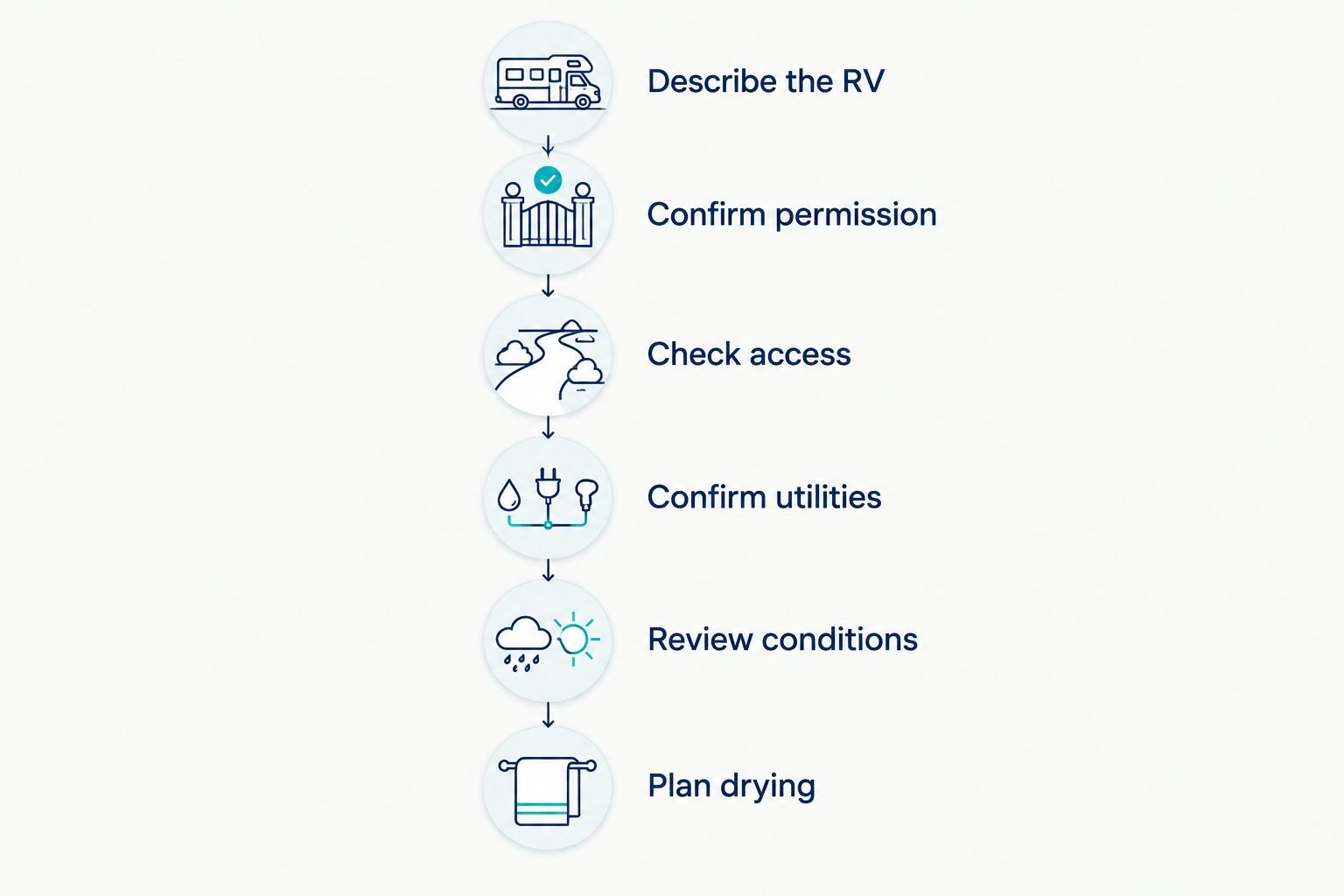
Resolve permission, access, utilities, and weather before the wash begins.
Can you wash an RV when it is below freezing?
32°F is water’s standard freezing point, so an ordinary outdoor water wash below that temperature creates a freezing hazard. Do not use a sunny forecast or warm water as a substitute for suitable surface and site conditions.
If an approved heated facility is being considered, ask the provider to assess the full setup. The route into and out of the building, drainage, and any water carried outside still need attention.
Does a winter exterior wash winterize your RV?
No. An exterior wash cleans outside surfaces; winterization addresses freeze protection for the RV’s water systems. Do not treat a wash appointment as confirmation that plumbing, tanks, or appliances are ready for freezing weather.
Keep the work scopes separate when requesting service. If the RV has already been winterized, tell the wash provider and confirm whether any proposed work would involve its water connections or systems. Request only the services the provider explicitly confirms.
What should a winter wash include—and what needs a separate discussion?
Start with the owner problem: road grime on the sides, dirt around exterior fittings, or an RV that needs cleaning before storage. Ask for a written scope that identifies the surfaces being cleaned and the drying work included.
Do not assume the word detailing means the same work in every quote. Roof cleaning, stain treatment, polishing, and applying a protective product are distinct tasks. Ask which tasks are proposed for your RV and whether the product instructions permit application under the expected conditions.
When comparing seasonal RV detailing packages, compare the stated cleaning and protection tasks rather than treating the package name as proof that it covers winter preparation. An exterior package does not, by its name alone, establish plumbing freeze protection, tank cleaning, or suitability for your location.
Separate the needed work from optional work. If the immediate problem is road grime, ask what cleaning is appropriate now and what should wait for better application or drying conditions. That produces a clearer quote than requesting every possible exterior treatment at once.
How do you arrange mobile service in Layton?
Trailhead-RV mobile RV washing suits Layton owners who want service at their RV’s location. The veteran-owned business provides mobile washing, detailing, and tank cleaning throughout Davis, Weber, and Salt Lake Counties in Utah.
That mobile convenience does not mean every parking location works in winter. Confirm service availability for your address, site permission, required utilities, and any travel fee. Ask about the proposed date without assuming winter appointments are available in every weather window.
For your 2026 quote request, send a short message with:
Your city and the actual parking location, including whether it is a residence, storage facility, or campground.
The RV type, approximate size, and photos showing the dirt or condition you want addressed.
Your requested work: exterior wash, detailing, or a separate tank-cleaning discussion.
Gate restrictions, property permission, available connections, and any snow or ice affecting access.
Preferred dates and flexibility if conditions require rescheduling.
Use the Trailhead-RV website to start the request. Ask for confirmation of scope, site requirements, any travel fee, and the weather plan before treating the appointment as settled.
Request a Layton mobile wash quote
Share your RV details, parking location, and winter access conditions.
FAQ
Can you wash an RV in winter in Layton, Utah?
Yes, you can wash an RV in winter in Layton when surfaces, water connections, and the work area remain suitable through washing and drying. Confirm the actual site conditions and weather plan with the provider before booking.
Is 32°F warm enough to wash an RV outside?
32°F is water’s standard freezing point, not a recommended outdoor RV washing threshold. An air-temperature reading alone does not establish whether shaded pavement, fittings, or the RV’s surfaces are above freezing.
Can warm water make an outdoor winter RV wash safe?
Warm water does not eliminate freezing risks on cold surfaces or pavement. The full washing and drying environment must be suitable, not just the water coming from the hose.
Can a mobile RV wash work at my Layton storage facility?
A mobile RV wash requires the storage facility’s permission and a workable site. Confirm washing rules, gate access, utilities, runoff arrangements, and winter surface conditions before scheduling.
Does washing my RV replace winterization?
No, exterior washing does not replace winterization of the RV’s water systems. Keep the cleaning scope separate from freeze-protection work and confirm any additional service explicitly.
What should I send when requesting a winter RV wash quote?
Send your location, RV type and approximate size, photos, requested cleaning work, and access details. Ask the provider to confirm availability, site permission requirements, utilities, any travel fee, and weather-related rescheduling.
One last thing
Follow the rinse water, not just the shine. Before calling the job finished, look at where water has collected beside the RV, especially near the steps and the route you use to reach the door.
A dry-looking sidewall does not prove that the shaded ground below it is dry. Keep people away from wet areas that could freeze, and resolve the runoff and drying plan before washing—not after temperatures start dropping.
Related guides
About the author
Seth Garecht is the author of this article.