
Instead of chasing photos and paperwork when your renewal notice arrives, organize your RV inspection before insurance renewal around your insurer’s written requirements, then schedule any needed cleaning before documenting the RV. This workflow helps Layton, Utah, owners separate insurance requirements from mobile wash and detailing work without booking the wrong service.
By Seth Garecht
TL;DR
Start your RV inspection before insurance renewal with written insurer requirements, not a cleaning appointment.
Trailhead RV provides mobile RV wash and detailing in Layton; confirm inspection requirements separately with your insurer.
Confirm site permission, utilities, service availability, and any travel fee before scheduling mobile service.
Keep original condition photos, cleaning records, and insurer acceptance together in your renewal file.
Why this matters
A clean RV and an insurer-accepted inspection serve different purposes. Washing removes surface dirt; it does not establish mechanical condition, certify roof integrity, or satisfy an insurer’s documentation requirements by itself.
Trailhead RV mobile RV wash and detailing is best for Layton owners who need cleaning, not an insurance inspection. The veteran-owned business comes to owners’ locations throughout Davis, Weber, and Salt Lake Counties. Use Trailhead RV to request a cleaning quote, and ask your insurer who must perform any required inspection.
For your 2026 renewal, make the insurer’s instructions the starting point. Do not assume an inspection is mandatory, that owner photos are sufficient, or that an agent’s receipt of your documents means the requirements are complete.
The practical goal is simple: know what to submit, arrange the right work, and obtain written confirmation before the deadline your insurer gives you.
Before you start
Gather access and records. Have your renewal notice, policy information, RV identification, previous submitted documents, and access to the insurer’s approved communication channel. Locate maintenance and repair records relevant to the request.
Get written submission requirements. Ask whether an inspection is required, who qualifies to perform it, which views or documents are needed, and when the insurer must receive them. Confirm whether photographs must show the RV’s condition before any work.
Clear the mobile-service location first. Confirm property permission, gate access, working space, utility needs, and any travel fee before booking. A storage space where parking is allowed does not automatically permit washing or outside contractors.
The non-obvious snag is provider eligibility: a wash receipt is not an inspection report. If your insurer requires a particular qualification or report format, confirm that before paying for an appointment.
Set up your renewal requirements
Turn the insurer’s request into a written checklist
Read the actual request. Separate the renewal deadline from any earlier document deadline. Ask the insurer to clarify unclear wording rather than deciding that a general condition request means a full inspection.
Ask what evidence is acceptable. Confirm whether the request calls for owner photographs, maintenance records, an inspection report, or another document. Ask who can supply each item and whether the insurer provides a form.
Confirm delivery and acceptance. Ask where to send the material, which file formats are accepted, and how you will know the submission is complete. Follow the insurer’s actual instructions rather than a generic online checklist.
Create a working file. For a 2026 renewal, use 4 folders: requirements, original photos, service records, and correspondence. Keep the insurer’s wording with the checklist so you can check each item against its source.
Expected result: You have 1 written checklist showing the requested evidence, responsible person, submission method, and deadline. Nothing on that checklist depends on guessing what your insurer wants.
If the request changes during a phone call, ask for the updated instructions in writing. Keep the earlier request too; it explains why your plan changed.
Configure the cleaning and inspection appointments
Match each appointment to its purpose
Do not book a general cleaning appointment and expect the provider to complete an insurance form on arrival. Describe the task accurately, then confirm the provider’s scope before scheduling.
Owner documentation
Best for: Owners whose insurer accepts their photos and records
Benefit: Captures the requested visible condition
Limitation: Does not replace a required professional inspection
Mobile wash or detailing
Best for: Owners who need exterior dirt removed before documentation
Benefit: Separates cleaning work from the paperwork task
Limitation: Does not certify condition or guarantee renewal
Insurer-required inspection
Best for: Owners whose insurer explicitly requests a qualifying report
Benefit: Addresses the insurer’s stated inspection requirement
Limitation: Provider eligibility and report format need confirmation
Preserve the starting condition. Follow the insurer’s photo instructions before cleaning or repairs. If you are documenting damage or discussing a possible claim, ask the insurer what must remain unchanged before work begins.
Confirm the inspection separately. Give the proposed inspector the insurer’s requirements. Obtain confirmation that the provider can perform the requested scope and produce the required documentation.
Request a cleaning quote if needed. Tell Trailhead RV that you want mobile RV wash or detailing before renewal documentation. Include your Layton location, RV type, exterior concerns, access restrictions, and desired timing. Do not describe the request as an insurance inspection.
Approve the site arrangements. Confirm service availability, permission, utility responsibilities, access, and any travel fee. Arrange the order of appointments around the insurer’s requirements, not around an assumed cleaning sequence.
Expected result: Each appointment has a defined purpose. Cleaning, inspection, and insurance acceptance remain separate responsibilities.
For a driveway or storage appointment, use the mobile RV wash preparation guide to organize your questions before confirming the visit.
Layton access details to settle before booking
Layton is the primary location for this workflow. Nearby Davis County owners in Clearfield, Kaysville, and Syracuse should provide the actual service address rather than relying on a city name alone.
Ask the property owner or facility manager whether outside contractors and washing are permitted. Give the provider gate instructions, appointment windows, and any restrictions on where work can occur. Confirm water, power, and wash-water arrangements directly; do not assume the site or provider supplies everything.
If the RV must move, establish who will move it and where it will sit during service. Keep keys and access arrangements clear without leaving sensitive policy documents inside an unattended RV.
Request a Layton cleaning quote
Share your RV type, location, cleaning needs, access restrictions, and preferred timing.
Assemble your condition record
Keep photographs, findings, and work records distinct
A useful renewal file makes it clear what was observed, what work occurred, and what remains unresolved. Attractive photos are not a substitute for accurate documentation.
Capture the requested views. Follow the insurer’s list and preserve the original files. Use clear light and include enough context to identify the area shown. Avoid filters or edits that change the appearance of damage.
Document visible concerns honestly. Record stains, cracks, damaged trim, or other concerns without diagnosing their cause. Do not climb onto the RV solely to obtain a photograph; ask how to provide inaccessible views safely.
Keep separate photo sets when useful. If cleaning occurs, retain 2 photo sets: before cleaning and after cleaning. Identify them clearly. These are organizational recommendations, not a substitute for the insurer’s photo specifications.
Attach the right records. Keep the cleaning invoice with cleaning records and any inspection report with inspection documents. If a qualified provider identifies a repair need, retain the written finding and any subsequent repair record.
Expected result: Your file distinguishes visible condition from cleaning work and professional findings. An invoice cannot accidentally be mistaken for proof that a defect was repaired.
For your 2026 folder, use descriptive filenames such as passenger-side exterior and rear corner detail. Keep the capture date with the files, and do not rename older photographs in a way that suggests they were taken recently.
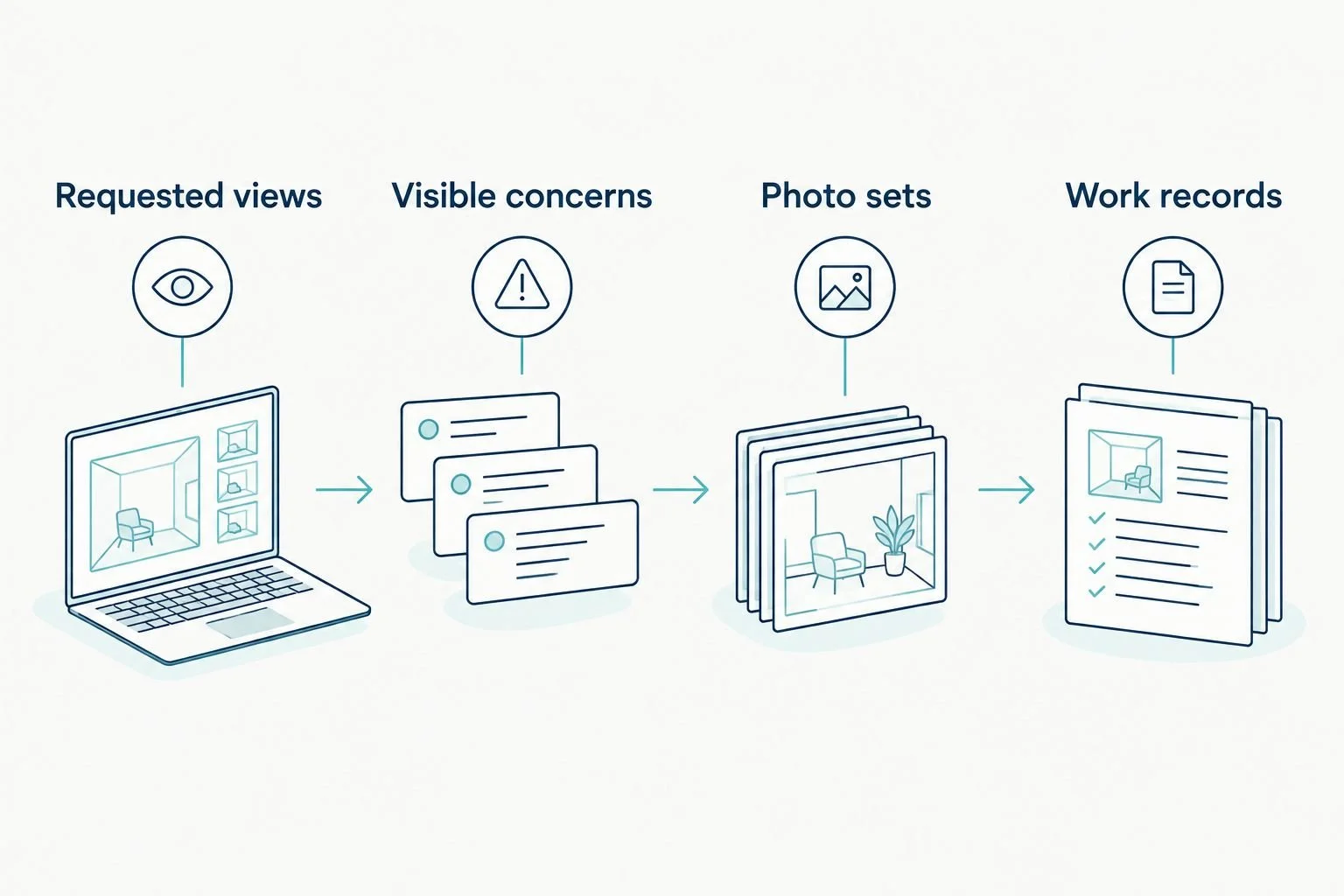
Keep condition evidence separate from records of cleaning or repair work.
Submit and verify the renewal file
Close the loop with the insurer
Check the submission against the request. Compare every attachment with the insurer’s checklist. Confirm that any required report identifies the RV and addresses the requested scope.
Send through the approved channel. Use the method your insurer supplied. Keep a copy of the submission and its confirmation, and avoid sending policy documents through an unrelated service provider’s quote form.
Ask whether anything remains outstanding. Request written confirmation of completeness, not just confirmation that an email arrived. If the insurer requires follow-up, record the exact item and deadline.
Save the final response. Put the acceptance or additional instructions in your 2026 correspondence folder. Check the renewal documents themselves for the terms and effective dates that apply to your policy.
Expected result: You know whether the requested documentation is complete and what, if anything, still needs action. Cleaning completion is not treated as insurance approval.
If the deadline is close, contact the insurer immediately. Do not assume a booked appointment, submitted quote, or pending report extends the deadline.
Update the file when work changes the RV’s condition
The same workflow applies when cleaning reveals a concern or a repair occurs after your first submission. Keep the original record instead of replacing it with a cleaner-looking version.
Ask what needs updating. Tell the insurer what changed and request instructions for any replacement photographs, repair records, or follow-up inspection.
Identify the sequence. Keep the original condition, the provider’s findings, and the completed work in separate records. Do not describe a concern as resolved solely because it looks better after washing.
Resubmit only as directed. Explain which material is new and ask whether the update satisfies the outstanding request.
For a later 2026 update, retain the first submission and the insurer’s response alongside the revised material. That keeps the record understandable without relying on memory.
Troubleshooting
The insurer rejected your photos
Ask for the specific reason: missing views, unclear images, an unacceptable format, or another requirement. Replace the affected material according to those instructions instead of repeatedly sending the same files.
The storage facility will not allow washing
Do not proceed without permission. Ask whether another approved location works for both the owner and provider, then reconfirm access, utility arrangements, availability, and any travel fee before moving the RV.
The requested inspector cannot provide the required report
Return to the insurer’s eligibility requirements and confirm another provider before scheduling. A cleaning provider’s availability does not resolve an inspection-provider mismatch.
Cleaning exposes a stain or damaged area
Record the concern without assuming its cause. Ask an appropriately qualified repair professional about diagnosis, and ask the insurer whether the new finding changes the documentation request.
You submitted everything but received no clear answer
Follow up with the insurer using the submission confirmation. Ask directly whether the renewal requirements are complete and whether any deadline or outstanding item remains.
Customize your workflow
Keep insurance documentation separate from routine RV care. Book cleaning because the RV needs cleaning; arrange an inspection because the insurer requires one or because you have a separate condition concern.
Trailhead RV mobile RV wash and detailing serves owners at their locations in Davis, Weber, and Salt Lake Counties. For a Layton quote, provide the RV type, actual location, requested cleaning work, site restrictions, and preferred timing. Confirm service availability, permission, utilities, and any travel fee before accepting the appointment.
Tank cleaning is a separate service request. Include it when you need black or gray tank cleaning, but do not add it to the renewal checklist unless your insurer specifically requests related documentation.
FAQ
Do I need an RV inspection before insurance renewal in Layton?
Ask your insurer whether your renewal requires an inspection. Get the required scope, provider qualifications, evidence, and deadline in writing before booking.
Can a mobile RV wash count as an insurance inspection?
A mobile RV wash does not establish that an insurer’s inspection requirements are satisfied. Cleaning records and inspection reports serve different purposes; confirm acceptable documentation with your insurer.
Does Trailhead RV provide insurance renewal inspections?
Contact Trailhead RV for its confirmed mobile wash, detailing, and tank cleaning services. Arrange any insurer-required inspection separately unless the exact inspection scope and provider eligibility are explicitly confirmed.
Should I wash my RV before taking insurance photos?
Follow your insurer’s instructions about when photographs must be taken. Preserve any requested pre-work evidence, especially when documenting damage or discussing a possible claim.
Can mobile cleaning take place at my Layton storage facility?
Confirm permission with the facility before booking mobile cleaning. Also confirm contractor access, working space, utility arrangements, service availability, and any travel fee with the provider.
What should I send when requesting a mobile RV cleaning quote?
Provide your RV type, actual service location, cleaning needs, access restrictions, and preferred timing. Explain that the cleaning is separate from any insurer-required inspection.
Does submitting an inspection report guarantee renewal?
Submitting a report does not establish that renewal is approved. Ask the insurer whether the documentation is complete and review the renewal terms it provides.
One last thing
Ask whether your file is complete, not merely whether it was received. That distinction is more useful than another round of photos when the real issue is an unanswered requirement.
Related guides
About the author
Seth Garecht writes practical RV care articles for Trailhead RV. This guide separates cleaning preparation from the inspection and documentation requirements you must confirm with your insurer.