
Instead of washing your RV and then discovering wax, water spots, or chalky residue before a coating appointment, arrange an RV wash before ceramic coating around the coating installer's preparation requirements. This workflow helps Salt Lake County owners coordinate mobile washing, surface preparation, and a clean handoff without treating an ordinary wash-and-wax as coating preparation.
By Seth Garecht
TL;DR
An RV wash before ceramic coating must follow the installer's requirements, not a standard wash-and-wax routine.
Trailhead-RV provides mobile RV washing and detailing; confirm the exact preparation scope before booking.
Identify paint, gelcoat, decals, and existing protection before selecting cleaning methods.
Salt Lake County appointments require confirmation of availability, site permission, utilities, and any travel fee.
Why this matters
A clean-looking RV is not automatically ready for ceramic coating. Dirt removal, removal of existing protection, surface correction, and final coating preparation are different tasks. Combining them under the word detailing leaves room for missed work.
Trailhead-RV is best for RV owners seeking mobile washing and detailing at their location within Davis, Weber, and Salt Lake Counties. The veteran-owned business comes to your location; ceramic coating installation and specialized preparation are separate scope questions to confirm, not services to assume.
Start with Trailhead-RV to discuss the wash and detailing portion of your 2026 project. Tell the service provider that a coating appointment follows the wash before agreeing to the work.
Before you start
Get the installer's requirements. Ask which surfaces will receive coating, who removes existing wax or sealant, who handles polishing, and who performs the final surface preparation. Keep those answers with your appointment details.
Gather the RV information. Have the exterior-care instructions, known finish types, previous protection details, and photos ready. Unknown coating history needs to be disclosed rather than guessed.
Confirm the work site and avoid the hidden mismatch. Check property permission, working space, utilities, drainage expectations, and scheduling with both providers. A wash that adds wax or gloss-enhancing protection can conflict with the installer's preparation process.
Do not buy specialty chemicals before the finish and preparation requirements are clear. A product suitable for painted panels is not automatically appropriate for every decal, roof material, plastic trim piece, or seal.
Wash scope and appointment handoff
Define the preparation job
Name the goal. Request a wash ahead of ceramic coating, not simply a detail. Explain whether your 2026 appointment covers the entire exterior or selected panels.
Identify the surfaces. Separate painted panels, exposed gelcoat, vinyl graphics, glass, trim, and roofing materials. Ask the installer to confirm the coating's approved surfaces rather than assuming one treatment fits everything.
Disclose previous protection. Report known waxes, sealants, coatings, and recent detailing. If the history is unknown, say so. A wash alone does not establish that previous protection has been removed.
Assign each task. Put washing, spot treatment, decontamination, correction, and final preparation under a named provider. Ask which tasks Trailhead-RV can include and which remain with the coating installer.
Expected result: You have a written scope that distinguishes cleaning from coating preparation. Nothing depends on an undefined promise to make the RV coating-ready.
Confirm access before scheduling
Send 3 photos: the RV's side, its rear, and the parking area around it. These help explain the vehicle and access constraints; ask whether additional views are needed.
Confirm site permission. If the RV sits at a storage facility, campground, or shared property, ask the manager whether mobile washing is permitted and what conditions apply.
Confirm utilities and working space. Ask the provider what water, power, clearance, and runoff arrangements the planned job requires. Do not assume either the property or the service vehicle supplies everything.
Agree on the handoff. Ask the coating installer how the RV should be transported, parked, and protected between washing and final preparation. Do not invent your own acceptable gap between appointments.
Expected result: Both providers understand where the work happens and what happens next. Get 2 confirmations before committing: permission from the property and acceptance of the preparation plan from the installer.
Exterior washing and drying
Remove loose contamination
Check the care instructions. Use methods approved for the RV's finishes, graphics, seals, and roof. Keep any material-specific restrictions in the job notes.
Start with appropriate rinsing. Remove loose dirt before contact washing. Avoid directing forceful water into vulnerable seals, openings, or damaged areas.
Wash with compatible products. Specify that no additional wax, sealant, or other protective finish should be applied unless the coating installer requests it. A wash-and-wax package is not an automatic substitute.
Treat stubborn contamination separately. Point out bug residue, tar, sap, and mineral spotting. Ask for material-compatible treatment rather than repeated aggressive scrubbing.
Rinse and dry deliberately. Do not let cleaning solution dry on the exterior. Follow the provider's drying method and account for water that remains around trim and fittings.
Expected result: Loose grime and ordinary road soil are removed, and the dry exterior is ready for a closer assessment. The wash does not certify that embedded contamination, oxidation, or old protection is gone.
Water spots deserve their own decision. The RV exterior water-spot removal guide addresses that problem separately; confirm finish compatibility before selecting any treatment.
Keep the next step clean
Avoid unnecessary handling. Keep dirty brushes, towels, and equipment away from cleaned panels. Separate tools used on lower, dirtier areas from tools used on the body.
Record what remains. Photograph visible spots, chalkiness, staining, scratches, and failing graphics after drying. These are handoff details, not proof that the wash failed.
Report changes before the coating appointment. If travel adds road film or the RV sits exposed to dust, tell the installer. Let the installer decide what cleaning must be repeated.
Expected result: The next provider receives an honest account of the exterior's condition instead of a vague statement that it was recently detailed.
Surface assessment and preparation approval
Separate dirt from finish defects
Assess the dry exterior. Look for remaining residue, uneven gloss, chalkiness, scratches, and damaged graphics. Do not diagnose every dull patch as dirt.
Request a limited test. Before approving broad correction work, ask the qualified provider to assess 1 panel or another small representative area. The purpose is to establish an appropriate method, not promise a particular result.
Confirm material limits. Ask how the provider will work around decals, edges, trim, and different finishes. Aggressive polishing is not a universal solution for an RV exterior.
Approve the final preparation sequence. The coating installer should specify any required removal of previous protection, polishing residue, or other contamination using the coating manufacturer's directions.
Expected result: Remaining defects are identified, the appropriate work is agreed upon, and the coating installer accepts responsibility for the final readiness check.
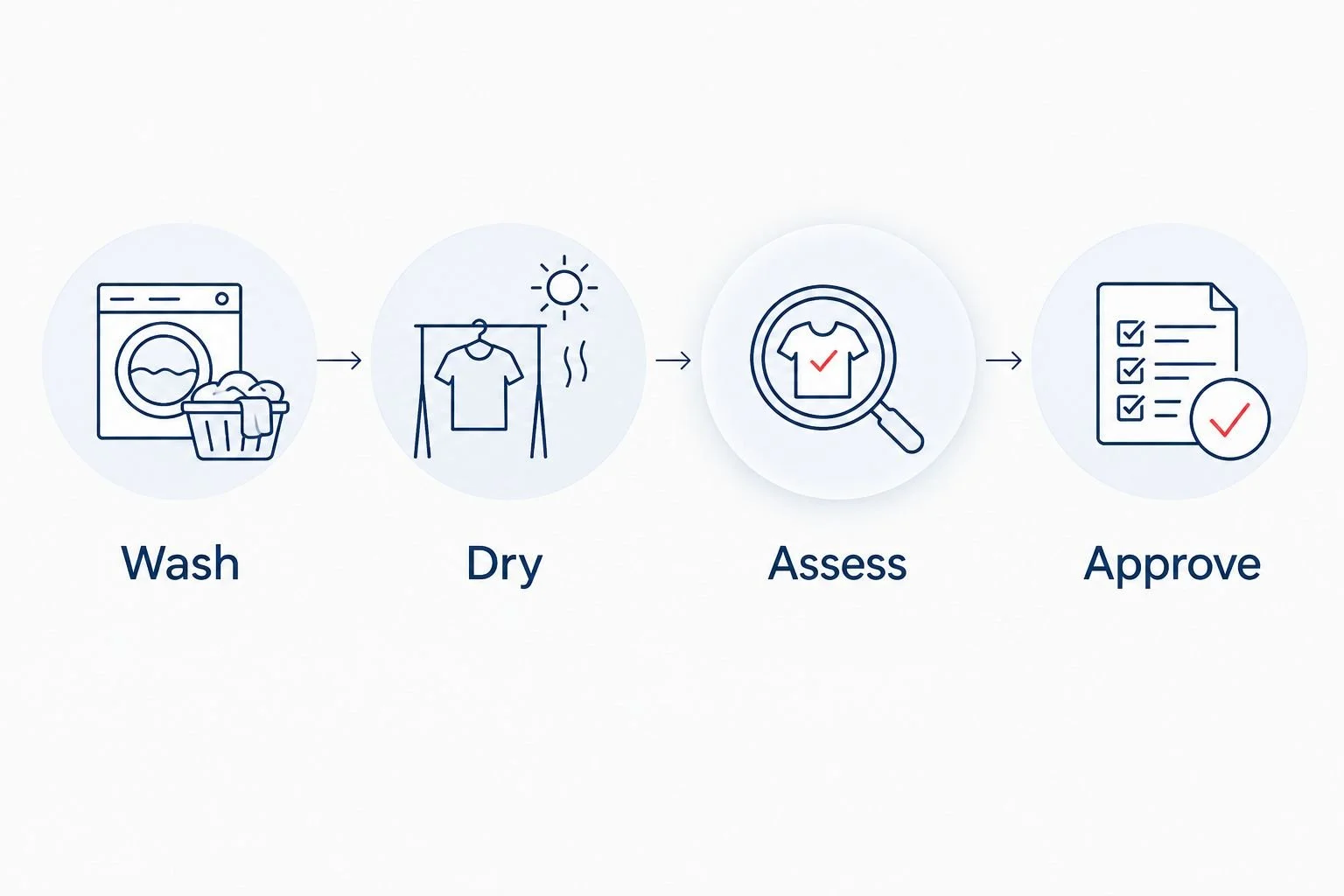
A wash starts preparation; approval comes after the dry surface is assessed.
Choose the correct work scope
Use this table to prevent a familiar booking mistake: choosing a package name without checking its purpose. These are work scopes, not confirmed service packages.
Routine exterior wash
Best for: Removing ordinary dirt
Benefit: Creates a cleaner surface for assessment
Limitation: Does not establish coating readiness
Installer-directed preparation
Best for: An upcoming coating application
Benefit: Assigns cleaning and preparation requirements before work
Limitation: Requires coordination and material-specific approval
Existing-coating maintenance wash
Best for: An RV already carrying a coating
Benefit: Follows the coating's care requirements
Limitation: Does not replace correction or a new application
Choose the scope before choosing the appointment. For a 2026 coating project, the decisive question is whether the agreed work matches the installer's requirements—not whether the package includes the most treatments.
Variant: washing an RV that is already coated
An existing ceramic coating changes the workflow. Tell the wash provider what was applied and share its care instructions; do not request fresh-coating preparation unless removal or reapplication is actually planned.
Identify the coating. Provide the application record if you have it. If you do not know the product or condition, disclose that uncertainty.
Follow its care directions. Confirm compatible washing methods and any restrictions before cleaning. Skip unrequested abrasive work or additional protection.
Evaluate after washing. Separate visible dirt and mineral deposits from concerns about the underlying coating. Ask the installer to assess suspected coating problems.
Document the next action. Decide whether the RV needs routine maintenance, targeted cleaning, or an installer assessment—not an automatic new application.
Discussions of ceramic coating for RVs need to distinguish surface compatibility from preparation: the coating must suit the material, and the substrate still needs the preparation specified for that application. A freshly washed panel answers neither question by itself.
Troubleshooting preparation problems
Wax was added during the wash
Tell the coating installer exactly what was applied. Do not assume another ordinary wash removes it. Ask the installer to specify the removal process and confirm who performs that work before the coating appointment proceeds.
The RV still looks chalky or dull
Stop treating the issue as remaining road dirt. Oxidation and finish deterioration require assessment, and correction options depend on the material and its condition. Do not approve stronger chemicals or more abrasion simply because the first wash did not restore gloss.
Spots remain after drying
Distinguish removable deposits from surface damage before escalating treatment. Photograph the affected area and ask for a compatible test method. Repeated scrubbing can create another problem without solving the original one.
The storage facility will not permit washing
Arrange an approved alternative location with the provider before rescheduling. Ask what space, utilities, and drainage conditions that location needs. Permission to store an RV is not permission to conduct mobile cleaning there.
The RV gets dirty between appointments
Notify the installer instead of covering the problem with a quick spray product. The installer should determine whether another wash or preparation step is needed. Build the 2026 schedule around the actual handoff conditions, not an assumed universal time limit.
Customize your Salt Lake County workflow
Trailhead-RV serves RV owners at their locations throughout Davis, Weber, and Salt Lake Counties, with Layton as its primary base. For this Salt Lake County project, provide the actual parking location—whether in Salt Lake City, Murray, Sandy, or another city in the county—rather than just the county name.
Request a mobile-service quote with the coating appointment clearly stated. Include your RV type, exterior materials if known, photos, current condition, access details, and the installer's preparation instructions. Confirm service availability, site permission, required utilities, and any travel fee before booking.
Keep your request direct: you need mobile washing or detailing ahead of a coating application, and you need the included preparation tasks identified. Do not assume ceramic coating installation, polishing, or chemical stripping is included.
Plan your pre-coating RV wash
Share your location, exterior condition, and coating installer's preparation requirements.
FAQ
Is an RV wash before ceramic coating enough on its own?
An RV wash before ceramic coating is not proof that the exterior is ready for application. The installer must confirm any additional cleaning, correction, removal of previous protection, and final preparation required.
Should I wax my RV before ceramic coating?
Do not add wax before ceramic coating unless the coating installer specifically requests it. Tell the wash provider about the coating plan so protective products are not added by default.
Can ceramic coating hide oxidation on an RV?
Do not use ceramic coating as a substitute for assessing oxidation. Have the affected finish evaluated and agree on appropriate preparation before coating.
Can I arrange mobile RV washing at a Salt Lake County storage facility?
Mobile washing at a storage facility requires the property's permission and the provider's confirmation of suitable access and working conditions. Verify utilities, drainage expectations, availability, and any travel fee before booking.
Does Trailhead-RV install ceramic coatings?
Confirm ceramic coating installation directly before booking; the stated services are mobile RV washing, detailing, and tank cleaning. Ask which preparation tasks can be included and which belong to your coating installer.
How long should I wait between washing and coating my RV?
Use the coating installer's scheduling requirements rather than a universal waiting period. Transport, exposure, drying, and the final preparation process determine what needs to happen before application.
What should I include in a 2026 pre-coating wash quote request?
Include your Salt Lake County location, RV details, exterior photos, access conditions, and the coating installer's preparation requirements. Ask for the wash scope, utility requirements, site conditions, and any travel fee to be confirmed.
One last thing
The most useful handoff is a product record, not just a clean RV. Ask the wash provider to identify the cleaners and protective products used, then pass that information to the coating installer. It makes the next preparation decision more specific.
Related guides
About the author
Seth Garecht writes practical RV care articles for Trailhead-RV.