
Best RV roof cleaners for rubber roofs in 2026
The best RV roof cleaner for rubber roof care is a cleaner your roof manufacturer explicitly approves. For routine washing, approved mild soap is another option; for hands-off care in Weber, Davis, and Salt Lake Counties, Trailhead-rv offers mobile RV washing—confirm roof-cleaning scope before booking.
TL;DR
The best rv roof cleaner for rubber roof care has explicit approval for your roof membrane.
Use mild soap only when your roof manufacturer's care instructions permit it.
Trailhead-rv offers mobile RV washing in Weber, Davis, and Salt Lake Counties; confirm roof-cleaning scope before booking.
Choose EPDM or TPO compatibility before stain-removal strength, and arrange safe access before cleaning.
Why this matters
Your roof has dark streaks, dirt around the vents, or residue that a quick rinse leaves behind. The next move is not automatically a stronger cleaner. First, identify the roof material and read its care instructions.
A bottle labeled for RV use does not establish compatibility with every roof membrane, sealant, or coating. For your 2026 cleaning plan, choose a method that matches the roof you actually own rather than a generic shopping-list winner.
If you want someone else to handle the wash, Trailhead-rv is a veteran-owned mobile RV wash, detailing, and tank cleaning service. It comes to owners' locations throughout the three Utah counties above. Ask specifically about your roof material, access requirements, and the work included in the quote.
What makes the best cleaner for a rubber RV roof?
These criteria determine the recommendation. Fragrance, bottle size, and broad cleaning claims do not replace compatibility instructions.
Material match: The cleaner's instructions must match your identified roof material, not just say RV cleaner.
Manufacturer approval: Follow the roof manufacturer's care instructions, including any restrictions on ingredients or cleaning methods.
Soil match: Distinguish ordinary dirt from a stain, sticky residue, or a surface problem that needs a different response.
Application control: Check dilution, dwell time, tools, rinsing, and runoff instructions before opening the container.
Safe access: Establish how the roof can be reached safely and whether the RV manufacturer permits walking on it.
Compatibility comes before cleaning strength. A cleaner that removes a mark is still the wrong choice if its use conflicts with the roof's instructions.
RV roof-cleaning options at a glance
This 2026 comparison ranks approaches by decision fit, not by unverified product performance. Each option serves a different owner situation; none is a universal winner.
Manufacturer-approved membrane cleaner
Best for: Owners choosing a dedicated roof-cleaning product
Standout feature: Approval tied to the actual roof material
Key limitation: Requires checking the roof and cleaner instructions
Manufacturer-approved mild soap
Best for: Routine dirt removal when the care manual permits it
Standout feature: A straightforward maintenance approach
Key limitation: Not a universal answer for stains or residue
Mobile RV washing
Best for: Owners who want help with washing at their location
Standout feature: Avoids taking the RV elsewhere for the wash
Key limitation: Roof inclusion, method, and access must be confirmed
The table deliberately compares cleaning approaches rather than named bottles. You need a compatibility decision before a product recommendation. Once you know the membrane and the approved method, choosing a cleaner becomes a narrower task.
1. Approved membrane cleaner: best for product selection
A dedicated membrane cleaner is the default product category to consider when your roof manufacturer approves it. Match the approval to the material, then follow the cleaner's application instructions. A general-purpose RV cleaner is not a substitute for that check.
EPDM and TPO are different roofing materials. EPDM is synthetic rubber; TPO is a thermoplastic membrane, although owners often group both under rubber roofs. That distinction matters when you read a label or ask for service.
Approved membrane cleaner pros:
Gives you a material-specific starting point when compatibility is explicitly documented.
Provides application instructions you can compare with the roof care manual.
Lets you select for the cleaning task rather than general exterior use.
Approved membrane cleaner cons:
Roof identification and label checking still fall on you.
Compatibility does not establish that every stain will come off.
Buying the cleaner does not solve unsafe roof access.
Best for: Owners who know their roof material and want a dedicated cleaner permitted by its manufacturer.
Before buying in 2026, read the current label rather than relying on an old recommendation. Check the membrane named, intended use, dilution instructions, and restrictions. If the instructions conflict with your roof manual, stop and resolve that conflict with the manufacturer.
Verdict: Buy only after confirming approval for your roof.
2. Approved mild soap: best for routine maintenance
Mild soap is an option when the roof manufacturer's instructions expressly permit it. Use the specified type and method, not your own interpretation of gentle. Household branding does not establish roof compatibility.
This approach fits ordinary maintenance dirt better than a plan to remove every discoloration. If routine washing leaves a mark behind, reassess what the mark is before adding stronger chemicals or harder scrubbing.
Approved mild soap pros:
Keeps routine cleaning aligned with the care manual when explicitly permitted.
Provides a straightforward approach for ordinary surface dirt.
Avoids treating every roof wash as a stain-removal project.
Approved mild soap cons:
The word mild alone does not establish suitability.
Persistent stains or sticky residue need separate evaluation.
You still need appropriate tools, rinsing, and safe access.
Best for: Owners whose roof care instructions permit mild soap for regular cleaning.
Do not improvise a dilution ratio. Use the instructions supplied for the approved cleaning method. Likewise, do not assume that a brush suitable for your RV's wheels is suitable for the roof membrane.
Verdict: Buy only the soap type your roof instructions permit; skip unverified substitutions.
3. Mobile RV washing: best for hands-off local care
Trailhead-rv mobile RV washing is best for owners in Weber, Davis, and Salt Lake Counties who want washing at their location. The verified convenience is the mobile service. Roof-cleaning inclusion and the exact method belong in the booking conversation, not in an assumption.
A mobile wash request should explain what you need cleaned and what you know about the roof. Share the RV model, roof material if documented, visible dirt or residue, and any existing coating. Ask what the provider needs from your location before confirming the appointment.
Mobile RV washing pros:
Brings the washing service to your location within the stated service area.
Gives you a way to discuss the cleaning task before attempting it yourself.
Fits owners who prefer arranging service to selecting tools and doing the wash.
Mobile RV washing cons:
Mobile RV washing does not automatically mean every roof-cleaning task is included.
A service request does not establish that a stain is removable.
Cleaning is not a substitute for repair when the membrane or sealant is damaged.
Best for: Local owners seeking a mobile wash and a clear discussion of roof-cleaning requirements.
For a 2026 quote, describe the problem rather than requesting the strongest treatment. Say whether you see loose dirt, dark streaks, sticky residue, or a damaged area. These are different requests and should not be bundled into one vague instruction to make the roof look new.
Verdict: Hold the booking until roof scope, compatibility, and access are confirmed.
How to choose before you clean
Use these three checks in order. They turn a broad cleaner search into a decision you can act on without guessing at chemistry or service scope.
Material check
Find the roof information in your RV documentation or the roofing manufacturer's records. Do not identify the membrane from color alone. If you cannot establish the material, contact the RV manufacturer before selecting a cleaner.
Include any coating in that check. Instructions for the original membrane do not automatically cover an added coating, and an approved cleaner for one surface does not establish approval for another.
Label check
Compare the cleaner's current instructions with the roof care guidance. Look for permitted surfaces, exclusions, dilution, tools, and rinsing. A broad claim such as suitable for RVs is not the same as documented compatibility with your membrane.
Do not mix cleaners. Do not substitute solvents, abrasives, or a pressure washer simply because ordinary washing did not remove a mark. Each proposed method needs its own compatibility check.
Access check
Read the RV manufacturer's roof-access instructions before climbing. Do not assume the roof supports walking, and do not treat a wet roof as a safe work surface.
If access is uncertain, arrange a service discussion rather than improvising. A cleaning product cannot solve an access problem.
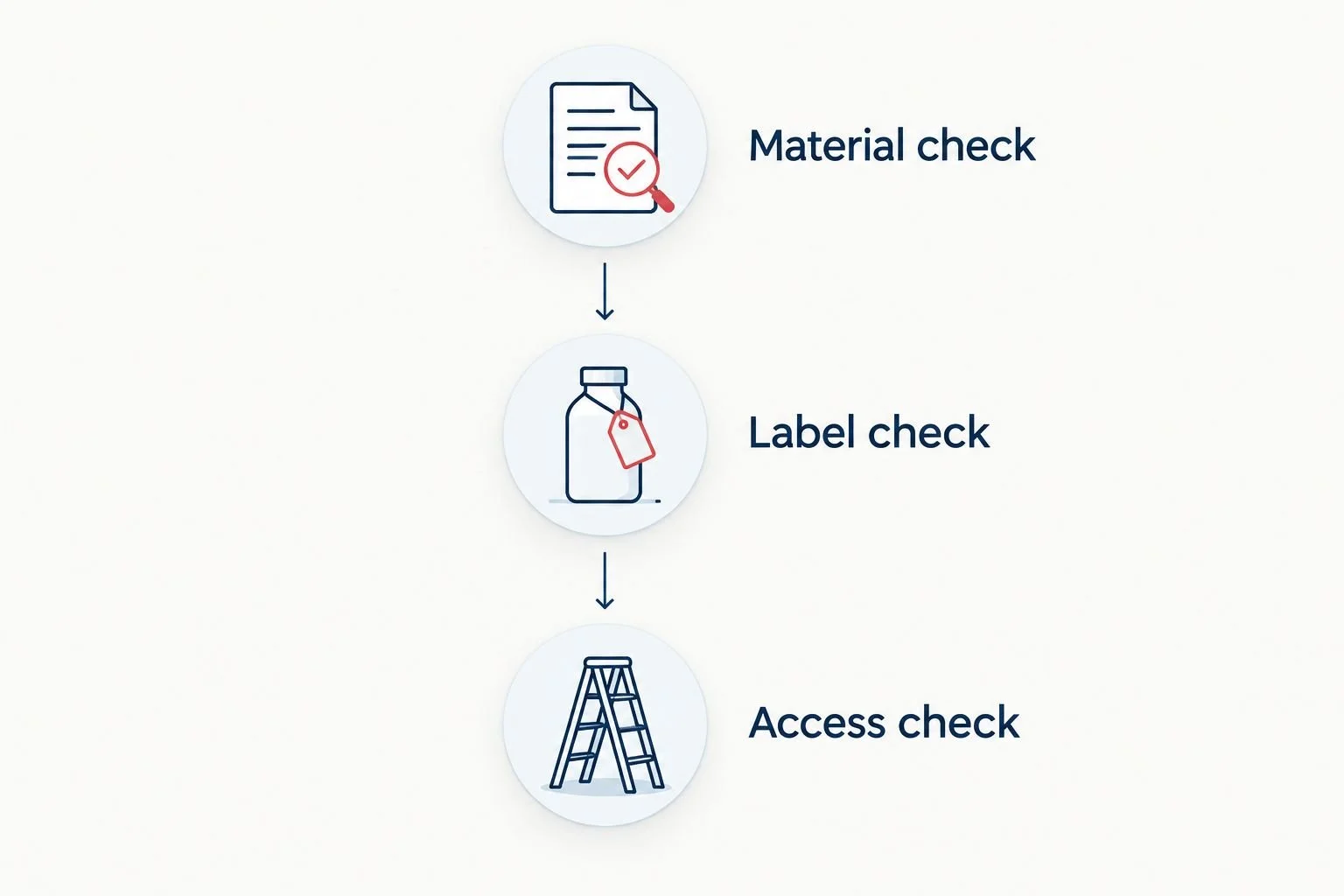
Confirm the material and cleaning method before deciding how to reach the roof.
For your 2026 wash, keep the relevant care instructions with the RV records. You can use the same information when buying a cleaner or requesting service, instead of repeating the material-identification step each time.
What to ask before requesting a roof wash
A useful service request separates the cleaning goal from the method. You describe the problem; the provider confirms the work offered and the requirements for performing it.
Use this checklist when contacting Trailhead-rv:
Roof inclusion: Is roof washing included in the requested service, or does it need a separate quote?
Material compatibility: What information is needed about the membrane and any coating?
Cleaning method: Which cleaner and tools are proposed, and how do they match the care instructions?
Location requirements: What access, permissions, or site arrangements are needed?
Scope limits: How are persistent stains, damaged areas, and repair needs handled?
Do not describe suspected damage as just a dirty spot. Report lifting edges, visible tears, or questionable sealant separately. This article recommends cleaning decisions, not inspection or repair services.
Request a mobile wash quote
Ask about roof-cleaning scope for your RV in Weber, Davis, or Salt Lake County.
How these recommendations are ranked
Manufacturer-approved membrane cleaner comes first because compatibility is the first product-selection requirement. Approved mild soap occupies the routine-maintenance slot. Mobile washing addresses the owner's preference for service at their location rather than DIY work.
These are conditional recommendations based on material match, manufacturer instructions, the cleaning task, application control, and access. They are not results from comparative product testing, and the order does not claim that one cleaning chemical outperforms another.
Which roof-cleaning option should you choose?
Choose an explicitly approved membrane cleaner if you need a product; choose approved mild soap if your manual permits it for routine washing. If you want someone else to handle the wash, request mobile service and confirm that your roof-cleaning task is included.
For an undecided owner, the next move is simple: identify the roof and retrieve its care instructions. That step is more useful than buying a cleaner because its label promises heavy-duty cleaning.
Your 2026 plan should match the condition of the roof, too. Ordinary dirt calls for an approved wash method. Persistent marks call for reassessment. Visible damage calls for a separate repair discussion—not more aggressive cleaning.
FAQ
What's the best RV roof cleaner for a rubber roof?
The best RV roof cleaner for a rubber roof is one explicitly approved by the roof manufacturer for that membrane. Identify the material and compare the current cleaner label with the roof care instructions before buying.
Can I use mild soap on my RV's rubber roof?
Use mild soap only when your roof manufacturer's care instructions permit it. Follow the specified soap type, application method, tools, and rinsing instructions rather than assuming any household detergent is suitable.
Are EPDM and TPO roofs the same?
No. EPDM is synthetic rubber, while TPO is a thermoplastic membrane. Owners often call both rubber roofs, but cleaner selection must follow the instructions for the actual material.
Can I pressure-wash my RV roof?
Do not pressure-wash an RV roof unless the relevant manufacturer instructions explicitly permit the method. Confirm any operating restrictions rather than treating pressure washing as a substitute for an approved cleaner.
Will roof cleaner remove every dark stain?
No cleaner recommendation establishes that every dark stain will come off. Clean with the approved method first, then seek material-specific guidance for remaining marks instead of escalating automatically to stronger chemicals.
Does Trailhead-rv offer mobile RV washing near me?
Trailhead-rv offers mobile RV washing at owners' locations throughout Weber, Davis, and Salt Lake Counties in Utah. Ask whether your specific roof-cleaning task is included and what location arrangements are required.
How much does a mobile RV roof wash cost?
Request a quote for your RV and the roof-cleaning work you want included. Confirm the scope and proposed method before booking; do not assume a general wash quote covers every roof task.
One last thing
A clean roof does not have to be a spotless roof. Chasing a persistent mark with an unapproved chemical or harder scrubbing changes the job from routine maintenance into an avoidable compatibility risk.
Keep the goal specific: remove ordinary dirt using the approved method, leave questionable areas alone, and report concerns separately. If you prefer mobile help, request a wash quote with your roof material and cleaning goal clearly stated.