
Yes—tank cleaning can fix false RV sensor readings when waste, paper, grease, or other buildup interferes with the level sensors. Cleaning does not repair damaged probes, loose wiring, or a faulty monitor. For Layton owners, the right next step is to document what the display does after dumping, then separate a tank-cleaning problem from an electrical problem.
TL;DR
Can tank cleaning fix RV sensor readings? Yes, when buildup causes the false reading—not when wiring or sensors fail.
Trailhead-RV provides mobile RV tank cleaning for Layton owners; confirm site access and service scope before booking.
Record black and gray tank readings separately before and after dumping and cleaning.
A persistent Full reading needs follow-up diagnosis, not an automatic promise that cleaning will fix it.
By Seth Garecht
Can RV tank cleaning fix false sensor readings in Layton, UT?
Cleaning addresses contamination inside the tank; electrical diagnosis addresses faults in the monitoring system. Those are different jobs, even when both start with the same dashboard symptom.
If your monitor still says Full after dumping, describe that behavior when requesting mobile RV tank cleaning in Davis County. Include which tank is affected and whether the reading ever changes.
Routine dumping and manufacturer-approved rinsing
Best for: Normal tank emptying and upkeep
What it addresses: Discharge and loose material
Limitation: Does not establish that sensor surfaces are clean
Professional tank cleaning
Best for: Persistent symptoms associated with interior buildup
What it addresses: Deposits and residue inside the tank
Limitation: Does not repair wiring, electronics, or failed sensors
Electrical and sensor diagnosis
Best for: Readings that remain wrong after cleaning, or documented electrical symptoms
What it addresses: Sensor connections, wiring, power, and monitor operation
Limitation: Does not remove tank deposits
These approaches are not interchangeable. Choose the work that matches the suspected cause rather than repeatedly buying the same intervention.
Why this matters
A monitor stuck on Full makes it harder to judge remaining holding capacity. An inaccurate low reading creates the opposite problem: apparent space that you should not assume is real.
Until you understand the fault, do not use the display as your only protection against overfilling. Follow the RV manufacturer's operating instructions and track use conservatively. Never keep adding water simply to force the monitor to change.
For a 2026 service request, a short symptom history is more useful than the statement that the sensors are bad. A reading that never moves presents a different starting point from one that rises normally but refuses to return to Empty.
When tank cleaning is the right starting point
Black tank: a false Full reading after dumping
Black tanks collect toilet waste and paper. In systems with internal conductive probes, residue bridging probe surfaces can interfere with the electrical signal used to indicate liquid level.
Cleaning is relevant when contamination causes that interference. However, the same Full display does not prove that paper or residue is responsible; a wiring or sensor fault can produce a misleading reading too.
Tell the service provider whether the tank drains normally, whether the reading changes during use, and what rinsing you have already attempted. Report slow drainage separately rather than treating every symptom as a sensor problem.
Gray tank: misleading readings without toilet waste
Gray tanks receive wastewater from sinks and showers. Soap residue, food particles, and grease belong in the troubleshooting discussion even though the tank does not receive toilet waste.
The practical advantage of cleaning is that it addresses contamination without assuming the monitor needs replacement. Its limit is equally clear: removing residue does not correct an electrical fault. Do not assume a gray tank is clean just because its contents look less unpleasant than black-tank waste.
External sensors: identify the system before promising a fix
Not every RV uses exposed probes inside the tank. External sensing systems measure tank contents differently, so explanations about waste bridging internal probes do not apply to every installation.
Find the monitor or sensor model in the owner's documentation, if available. Interior cleaning can address deposits, but sensor placement, configuration, connections, and manufacturer-specific troubleshooting still matter. A cleaning recommendation should account for the sensor type—not ignore it.
Why the result varies
Whether cleaning restores a believable reading depends on the fault, not simply on how dirty the tank appears. These factors explain why one RV responds to cleaning while another needs additional work:
Sensor design: Internal probes and external sensors do not detect contents in the same way.
Deposit location: Material affecting a sensing surface matters differently from residue elsewhere in the tank.
Drainage condition: Remaining liquid and a misleading display are different problems; confirm the tank's discharge behavior.
Electrical condition: Damaged wiring, poor connections, or failed components remain faults after cleaning.
Tank configuration: Separate black and gray tanks need separate observations; one accurate reading does not validate another.
Comparison method: Before-and-after readings are meaningful only when you record the tank's known operating condition.
Avoid turning an odor complaint into a sensor diagnosis. Odor and inaccurate readings can occur together, but odor alone does not identify the failed component or prove that cleaning will restore the display.
What should you record before requesting cleaning?
Use this 2026 troubleshooting checklist before changing treatments or booking work. You do not need to dismantle the RV to provide useful information.
Identify the tank. Write down the exact display label. Distinguish the black tank from each gray tank rather than reporting that all tanks are wrong.
Record the reading. Photograph the display before dumping and again afterward. Note whether the reading changes at all.
Describe drainage. Report normal discharge, slow discharge, or other observed behavior. Do not open a connection merely to investigate a suspected blockage.
List prior treatments. Give product names and describe any rinsing already performed. Do not mix cleaning chemicals to chase a different reading.
Find documentation. Share the RV model and monitor information if you have it. Manufacturer instructions take priority over generic troubleshooting advice.
Keep that information together for the appointment. It gives the provider a defined complaint and makes the after-service comparison less dependent on memory.
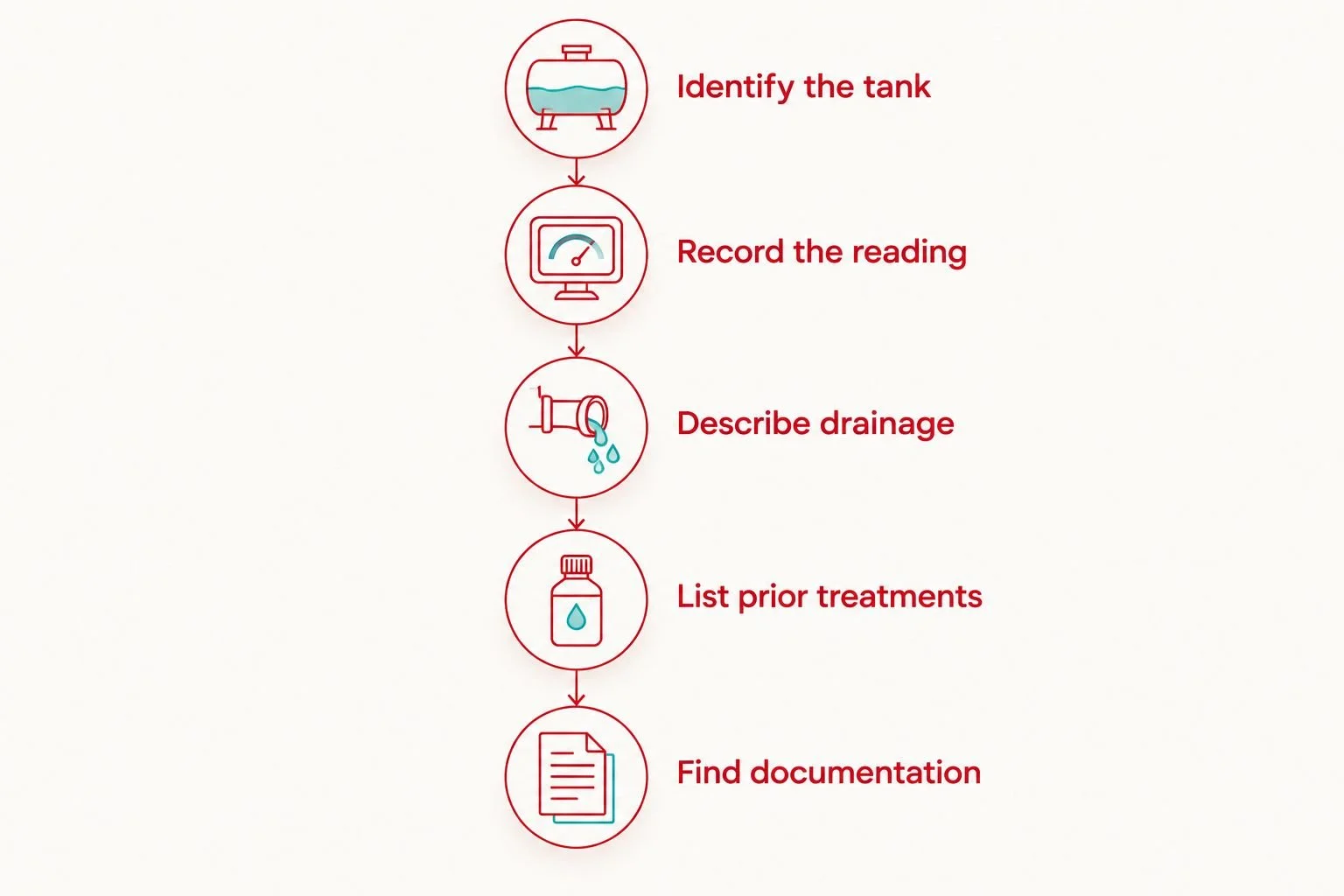
Record the symptom before cleaning so you can compare the same tank afterward.
Do not run an uncontrolled fill test just to produce a better photograph. A useful record describes normal operation; it does not require filling a tank to its limit.
How should you judge the result after cleaning?
Judge sensor behavior against a known tank condition, not against a promise of perfect accuracy. Ask how the provider will document completion and what comparison is appropriate for your monitor.
First, record the display after the agreed cleaning and draining work. Then observe whether the display responds during normal use in the way the manufacturer describes. A single Empty indication is encouraging, but it does not establish that every higher level reads correctly.
For your 2026 maintenance record, keep the before-and-after photographs, the affected tank label, and the service description together. If the complaint returns, that history helps distinguish a recurring deposit problem from a persistent monitoring fault.
Do not describe the result only as fixed or not fixed. Note whether the reading changed, whether drainage changed, and whether the original symptom persists. Those observations support a more specific follow-up request.
What if the tank still reads Full after cleaning?
A persistent Full reading after cleaning calls for diagnosis, not an automatic repeat cleaning. Ask what evidence remains for an interior contamination problem and whether the next step belongs with a qualified RV repair technician.
The follow-up should account for the sensor model, accessible connections, wiring condition, monitor operation, and any manufacturer-required setup. Do not assume a tank-cleaning appointment includes electrical troubleshooting or component replacement.
For full-time travelers, RV diagnostic checks should separate a sanitation problem from a monitoring fault before another trip. Tank cleaning and electrical diagnosis answer different questions; using the same symptom as proof of both leads to poorly defined service requests.
Avoid opening electrical compartments or disconnecting probes without the appropriate instructions and skills. Share your recorded observations with the technician instead of replacing parts solely because the display remains unchanged.
Booking mobile tank cleaning in Layton
Trailhead-RV is a veteran-owned mobile RV wash, detailing, and tank cleaning service serving Weber, Davis, and Salt Lake Counties in Utah. For this article, Layton is the primary service location; owners in nearby Clearfield, Syracuse, and Kaysville should also confirm scheduling for their specific address.
Trailhead-RV mobile RV tank cleaning is a service option for Layton owners seeking tank cleaning at their RV's location. The convenience is avoiding a separate trip with the RV for that cleaning appointment. The limitation is that the location still needs suitable access and permission, and cleaning does not substitute for electrical repair.
Before requesting a 2026 appointment, confirm these details:
Site permission: Ask the campground, storage facility, or property owner whether mobile tank work is permitted. Permission to park does not automatically authorize service work.
Physical access: Explain gate arrangements, parking restrictions, and access to the RV's tank outlet. Photographs help communicate the actual setup.
Utilities: Ask what water or power access the requested service needs and who supplies it. Do not assume the mobile provider brings every utility.
Wastewater handling: Confirm the required discharge arrangement and any site requirements before work is scheduled. Do not assume a nearby drain is an approved disposal point.
Scope and travel: Confirm service availability, included tanks, exclusions, and any travel fee for the address. County coverage is not a promise of identical access or charges everywhere.
These are booking checks, not claims about a particular Layton property. Your storage agreement or campground rules determine what the site permits.
What should you say when requesting a quote?
Start with the symptom: the black tank still reads Full after dumping, for example. Add the RV location, affected tank labels, drainage behavior, sensor information, and treatments already used.
Then ask whether the quote covers the cleaning needed for that complaint, what site preparation is required, and how the reading will be checked afterward. Request confirmation of utilities, wastewater arrangements, service availability, site permission, and any travel fee before accepting an appointment.
You can request mobile tank-cleaning information through Trailhead-RV. Describe a suspected buildup problem rather than requesting a guaranteed sensor repair.
How do you reduce repeat problems without guessing?
Follow the tank, toilet, and monitor manufacturers' instructions for water use, dumping, rinsing, and compatible treatments. Do not substitute a universal chemical recipe for instructions specific to your equipment.
If a reading changes after cleaning and later becomes inaccurate again, record when the change occurs and how the tank has been used. That pattern is more useful than repeatedly adding products without documenting the result.
For the rest of 2026, keep a simple maintenance log with symptoms, service dates, and display photographs. Avoid assigning a fixed cleaning interval based only on a false reading; usage and the actual cause of the complaint should guide the discussion.
FAQ
Can tank cleaning fix RV sensor readings that stay on Full?
Yes, tank cleaning can fix RV sensor readings when deposits interfere with the sensors. It does not repair failed sensors, damaged wiring, or a faulty monitor.
Why does my RV black tank say Full after I dump it?
A black tank can show Full after dumping because of sensor contamination or a monitoring-system fault. The display alone does not establish which cause is responsible or prove that the tank drained completely.
Can gray tank sensors give false readings too?
Yes, gray tank sensors can give false readings. Residue and electrical faults belong in the troubleshooting discussion, even though gray tanks do not receive toilet waste.
Should I replace RV tank sensors before having the tank cleaned?
Do not replace sensors solely because the display is inaccurate. Identify the sensor system and document the symptom first; cleaning addresses deposits, while diagnosis determines whether components need repair or replacement.
Does a tank-cleaning appointment include electrical repair?
Do not assume a tank-cleaning appointment includes electrical repair. Confirm the service scope before booking and ask who should handle a reading that remains wrong after cleaning.
Can I book mobile RV tank cleaning at a Layton storage facility?
Confirm facility permission and service access before booking mobile tank cleaning at a Layton storage facility. Also confirm utilities, wastewater handling, scheduling, and any travel fee for the address.
What should I send when asking for a mobile tank-cleaning quote?
Send your RV location, affected tank labels, display photographs, drainage observations, and a list of treatments already used. Ask the provider to confirm the cleaning scope and site requirements.
One last thing
An Empty reading after cleaning is not proof that every sensor level works correctly. Continue observing the display during normal use and retain the original symptom record. The goal is a monitor you understand—not just a different light on the panel.
Related guides
About the author
Seth Garecht is the author of this article on RV tank cleaning and false sensor readings for owners in Layton, Utah.