
Yes, you can clean an RV rubber roof yourself in Davis County if the roof manufacturer permits your access method, you use an approved cleaner, and you can work safely. If the roof material, condition, or access is uncertain, stop before climbing or applying chemicals; a wash does not repair damaged roofing or failed seals.
TL;DR
Can you clean an RV rubber roof yourself? Yes, with manufacturer-approved methods, compatible cleaner, and safe access.
Trailhead-RV serves Davis County RV owners who want a mobile RV wash; confirm roof-cleaning scope before booking.
Identify the roof membrane before choosing a cleaner, brush, or treatment.
In Layton, confirm site permission, utilities, service availability, and any travel fee before scheduling mobile service.
By Seth Garecht | Updated for 2026
Why this matters
A dirty roof is frustrating. Scrubbing harder or reaching for a stronger chemical is not the answer when you have not identified the membrane or checked its care instructions. Roof surfaces, seams, accessories, and the RV's sidewalls all need consideration during washing.
Trailhead-RV is best for Davis County RV owners seeking a mobile RV wash at their location. The veteran-owned business serves Weber, Davis, and Salt Lake Counties; ask Trailhead-RV whether your particular roof-cleaning request fits the available service scope.
Can you clean your RV rubber roof yourself in Davis County?
Yes, provided you can establish a safe, manufacturer-approved cleaning method. Your decision should start with the roof documentation, not the appearance of the dirt or the fact that your RV has a ladder.
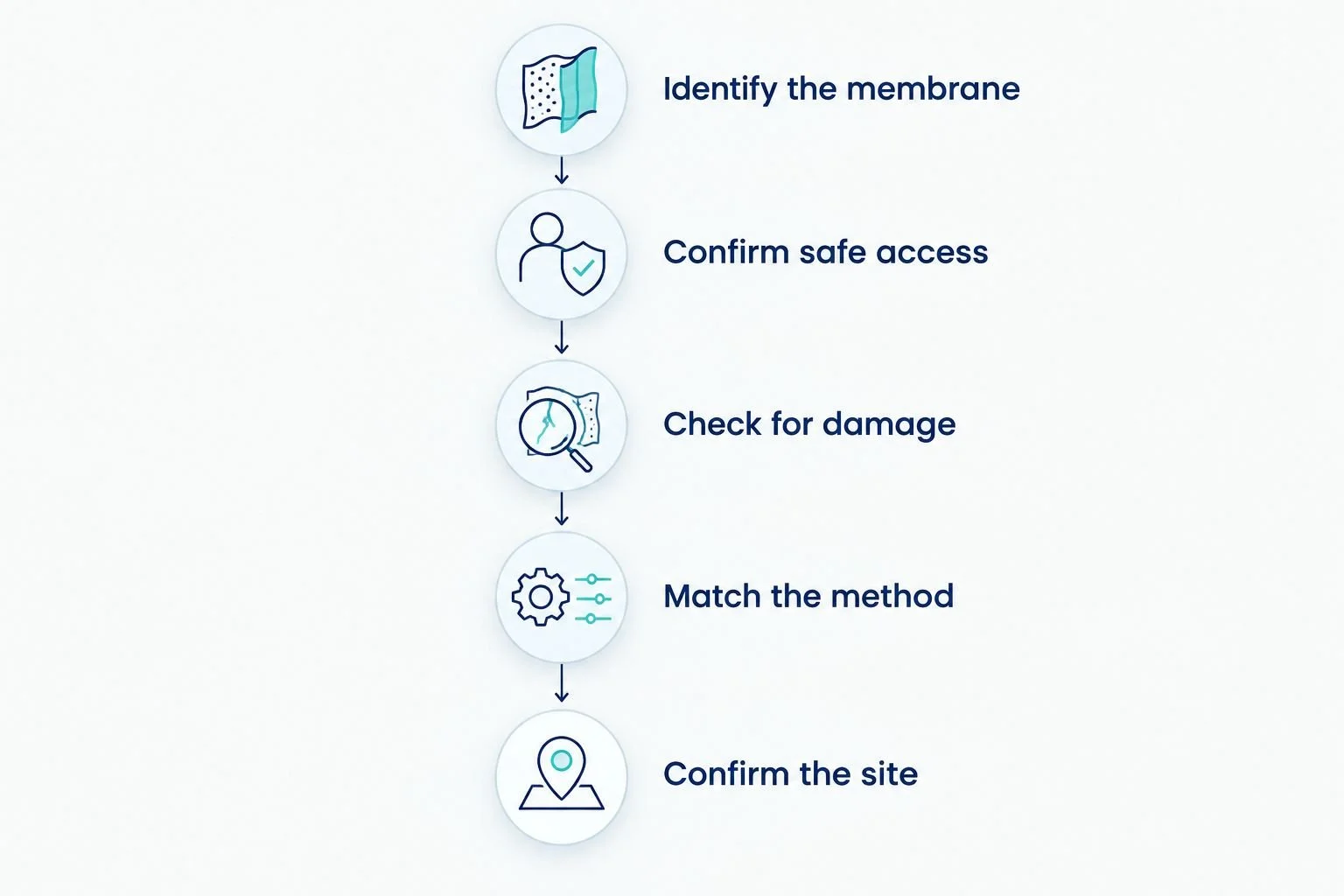
For your 2026 cleaning plan, use this sequence before opening a cleaner or setting up access:
Identify the membrane. Check the owner's manual, roof paperwork, or manufacturer information for the actual roofing material.
Confirm safe access. Find out whether the roof permits foot traffic and how the manufacturer says to access it. A ladder alone does not establish that the roof is walkable.
Check for damage. From a safe position, look for tears, lifting seams, loose material, or visibly deteriorated sealant. Stop if cleaning would disturb a damaged area.
Match the method. Confirm the cleaner, brush, dilution, application, and rinse instructions against the roof manufacturer's guidance.
Confirm the site. Make sure washing is permitted where the RV sits and establish how water, runoff, and access will be handled.
These are separate checks. An approved cleaner does not make an unsafe roof safe to walk on, and permission to wash at a storage facility does not establish cleaner compatibility.
Decide how to access and clean the roof before starting the wash.
DIY cleaning or mobile service: which fits your situation?
Choose DIY only when you can verify both the cleaning method and safe access. Choose a mobile-service inquiry when you want help with the wash, but confirm roof work specifically rather than assuming an exterior wash includes it.
DIY roof cleaning
Best for: Owners with confirmed instructions, safe access, and site permission
Practical advantage: You control the cleaning process and schedule
Limitation: You remain responsible for access, compatibility, runoff, and stopping when conditions are unsafe
Mobile-service inquiry
Best for: Owners who want washing performed where the RV is parked
Practical advantage: You can discuss the job without first moving the RV to a wash location
Limitation: Roof scope, site suitability, utilities, availability, and any travel fee need confirmation
Postpone and seek repair guidance
Best for: Owners who see damaged material, loose seams, or signs of leakage
Practical advantage: You avoid treating a repair problem as ordinary dirt
Limitation: Postponing the wash does not resolve the underlying damage
Mobile convenience does not remove the need for permission or access planning. Likewise, doing the job yourself does not make every driveway or storage space suitable for washing.
What should you check before washing a rubber roof?
Start with the membrane name. EPDM and TPO are different roofing materials, and the general description rubber roof is not enough to select a cleaning method. Coatings and previous repairs also matter.
Use the RV and roof manufacturer's care instructions together. If the product label and roof instructions do not clearly support the intended use, do not experiment on the roof to find out.
Before you begin, check:
Cleaner compatibility: Confirm approval for the actual membrane and any existing coating.
Brush suitability: Use the brush or cleaning tool specified by the care instructions, not an abrasive tool chosen to remove a stubborn mark.
Accessory instructions: Roof vents, skylights, solar equipment, and sealants can have separate care requirements.
Safe footing: Do not work on a slippery surface or stretch beyond stable access.
Rinse planning: Plan for water and cleaner reaching the sidewalls and surrounding ground.
Avoid improvising with solvents, abrasive pads, or household chemical mixtures. A cleaner that works on another surface is not automatically suitable for your roof.
How do you clean the roof without creating another problem?
Follow the manufacturer's sequence rather than a generic recipe. Without your specific roof documentation, there is no defensible universal dilution, dwell time, cleaning interval, or pressure setting.
Prepare the RV and work area
Close roof openings and follow the equipment instructions for protecting anything exposed to wash water. Clear the surrounding area and establish safe access before introducing water or cleaner.
Remove loose debris using a method the manufacturer permits. Do not drag debris across the membrane or force tools beneath seals and accessory edges.
Wash manageable sections
Apply the compatible cleaner exactly as directed. Keep the work area manageable so you can control footing, agitation, and rinsing without reaching across wet roofing.
Do not let frustration with a mark dictate your method. If an approved cleaning pass leaves discoloration, stop and identify the cause instead of escalating to a harsher chemical or stiffer brush.
Rinse and assess from a safe position
Rinse according to the instructions, accounting for runoff over the RV's sides. Avoid directing water into openings or forcing it beneath roof details.
Check the result without stepping into unsafe conditions. If washing exposes loose material or an area that needs repair, do not cover the problem with an unverified treatment.
Why does the right cleaning approach vary?
The correct approach depends on your RV and its parking site, not simply your Davis County address. Use these factors to explain the job when requesting advice or a quote in 2026:
Roof material: The identified membrane determines which care instructions apply.
Existing treatments: Coatings and previous repairs need compatible cleaning methods.
Roof condition: Damaged material or suspect seams can require repair guidance before washing.
Roof equipment: Accessories affect access and which surfaces need separate handling.
Parking conditions: Clearance, working space, permission, and runoff affect whether washing can proceed at the site.
Owner access: A method is unsuitable if you cannot carry it out safely, even when the cleaner itself is approved.
Photographs can help explain the request, but they do not establish that a roof is safe to walk on. Take them only from a safe location; a quote request is not a reason to climb.
Can you use a pressure washer on an RV rubber roof?
Do not use a pressure washer unless the roof and RV manufacturers expressly permit the method and provide instructions you can follow. A general claim that a washer has an adjustable setting does not establish compatibility with your membrane, seams, or accessories.
There is no universal safe pressure setting for every RV roof. If the documentation does not authorize pressure washing, choose a permitted cleaning method instead.
Does cleaning an RV rubber roof stop leaks or UV damage?
No. Cleaning removes surface contamination; it does not repair a leak or establish that the membrane has UV protection. Roof treatments are separate products with separate compatibility and application requirements.
Do not add a coating, dressing, or protectant simply because the roof looks dull after washing. Check whether the manufacturer calls for any treatment at all, and keep repair decisions separate from appearance decisions.
How should full-time RV owners plan roof care?
Build your 2026 roof-care routine around the manufacturer's instructions and the conditions you actually observe. Do not wait for severe staining to start checking the documentation, but do not adopt an unsupported calendar interval either.
The same distinction belongs in any RV detailing guide: keeping an occupied RV presentable and selecting a membrane-compatible roof-care method are separate tasks. A clean sidewall does not tell you which chemical belongs on the roof.
Keep the roof material, care instructions, previous treatment information, and service notes together. That record gives you a clearer starting point when changing cleaners or discussing mobile washing after moving to another parking site.
What should Layton owners confirm before mobile service?
Layton is the primary local focus for this Davis County guide, with nearby Clearfield and Kaysville relevant to the same service-planning questions. Trailhead-RV provides mobile RV wash, detailing, and tank cleaning across Davis, Weber, and Salt Lake Counties. Confirm roof cleaning as a specific request; do not assume it is included in every wash.
For a 2026 booking inquiry, establish these details before agreeing on the visit:
Site permission: Ask the property owner or storage manager whether mobile washing is permitted and what conditions apply.
Access: Describe gates, overhead clearance, nearby vehicles, and available working space.
Utilities: Confirm whether water or electrical access is needed and who supplies it.
Runoff: Ask how wash water will be handled at your particular site.
Scheduling: Confirm service availability for your address and requested work.
Travel: Ask whether a travel fee applies rather than assuming every location has identical terms.
These are booking questions, not claims about a particular facility's rules. The mobile RV wash preparation guide covers the related planning topic.
What should you send with a quote request?
Give Trailhead-RV the city, parking arrangement, RV type, known roof material, and the problem you want addressed. Describe whether the concern is loose dirt, staining, debris, or visible damage. Include safe-to-take photographs if available.
Ask for the proposed scope in plain language: whether roof cleaning is included, what preparation you must complete, what utilities are required, and whether any travel fee applies. If the material is unknown, say so before anyone selects a cleaner.
Request a mobile wash quote
Share your Davis County location, roof details, and parking setup; confirm roof scope and site requirements.
FAQ
Can you clean an RV rubber roof yourself in Davis County?
Yes, if you can follow the roof manufacturer's cleaning instructions and use safe, approved access. Confirm site permission and cleaner compatibility before starting.
Can I walk on my RV roof to clean it?
Walk on the roof only if the manufacturer permits it and you can meet the stated access requirements. An installed ladder does not establish that every roof area supports foot traffic.
What's the safest cleaner for my RV rubber roof?
Use a cleaner approved for your specific roof membrane and any existing coating. The phrase rubber roof alone does not identify a suitable product.
Can I pressure wash my RV roof?
Do not pressure wash unless the RV and roof manufacturers expressly permit the method. Follow their instructions rather than selecting a generic pressure setting.
How often should I clean my RV roof in 2026?
Follow the roof manufacturer's maintenance schedule and respond to the roof's actual condition. There is no single cleaning interval supported for every membrane and parking situation.
Does a mobile RV wash include rubber roof cleaning?
Do not assume roof cleaning is included in an exterior wash. Ask the provider to confirm roof scope, access requirements, utilities, and any exclusions before booking.
Can mobile washing happen at my Layton storage facility?
Mobile washing requires the facility's permission and a suitable work area. Confirm access, utilities, runoff arrangements, service availability, and any travel fee for the specific location.
One last thing
The most useful roof-cleaning tool is the correct care document. Find it before buying chemicals or booking work. Knowing the membrane and approved method helps you avoid turning a straightforward wash into an experiment on your RV.
Related guides
About the author
Seth Garecht is the author of this article for Trailhead-RV, a veteran-owned mobile RV wash, detailing, and tank cleaning service serving Davis, Weber, and Salt Lake Counties in Utah.