
Best mobile RV tank cleaning services near Ogden Utah 2026
Sensors still read Full after dumping? Trailhead-RV is a mobile RV tank-cleaning option for Ogden owners who want service at their location. This 2026 guide explains when professional cleaning fits, when routine flushing is enough, and what to ask before requesting a quote from Trailhead-RV.
By Seth Garecht
TL;DR
For best mobile RV tank cleaning services Ogden Utah searches, Trailhead-RV offers verified mobile service in Weber County.
Choose professional tank cleaning for persistent buildup concerns, not as a substitute for diagnosing broken components.
Compare black and gray tank scope, location requirements, cleaning method, and quote inclusions before booking.
Routine flushing, tank treatments, and professional cleaning serve different purposes; match the service to your symptoms.
Why this matters
A tank that has been dumped is not necessarily a clean tank. Wastewater can drain while residue remains on interior surfaces, and a monitor reading alone does not establish what is happening inside.
The useful question is not which company makes the biggest promise. It is which service addresses your problem, reaches your location, and explains its scope before you book. For an Ogden owner comparing options in 2026, that starts with separating cleaning from routine care and mechanical diagnosis.
What makes a good mobile RV tank-cleaning service?
Use these criteria before choosing a provider. A clear answer matters more than an unsupported best-service label.
Location coverage: Confirm the exact address where your RV is parked, not just the nearest city.
Tank scope: Specify black tanks, gray tanks, and any separate holding tanks on your RV.
Cleaning method: Ask how the service removes residue and accesses the tank.
Site requirements: Confirm access, water, wastewater disposal, and property permission before the appointment.
Quote clarity: Ask what the proposed work includes and which problems fall outside it.
Realistic expectations: Cleaning addresses contamination and buildup; damaged sensors, valves, or plumbing require a different assessment.
Veteran-owned status identifies something about the business. It does not replace these practical questions. You still need a service scope that matches your RV and the symptoms you describe.
Your tank-care options at a glance
These are 4 service routes, not a ranking of competing businesses. Choose according to the problem rather than treating every odor or inaccurate reading as the same fault.
Mobile professional tank cleaning
Best for: Owners seeking help with persistent residue concerns at their parked RV
Main benefit: Brings tank-cleaning service to your location
Key limitation: Does not establish that a damaged component needs no repair
Routine dumping and flushing
Best for: Regular wastewater maintenance
Main benefit: Removes wastewater and rinses loose material
Key limitation: Does not prove attached deposits are gone
Compatible tank treatment
Best for: Routine care between dumps
Main benefit: Supports the purpose stated on the treatment label
Key limitation: Is not a mechanical repair or proof of a clean tank
RV repair diagnosis
Best for: Leaks, damaged valves, or unresolved electrical and plumbing concerns
Main benefit: Investigates component faults
Key limitation: Is a different scope from tank cleaning
Both black and gray systems deserve attention. The 2 tank types handle different wastewater: black tanks receive toilet waste, while gray tanks generally collect sink and shower wastewater. Tell the provider which system is causing trouble rather than requesting an unspecified tank service.
1. Trailhead-RV: mobile tank cleaning near Ogden
Best for: RV owners in the service area who want tank cleaning without taking the RV elsewhere.
Trailhead-RV is a veteran-owned mobile RV wash, detailing, and tank-cleaning service serving Weber, Davis, and Salt Lake Counties. The business comes to RV owners' locations, making it a relevant provider for an Ogden tank-cleaning inquiry.
Describe the symptom before asking for an appointment. A tank that drains but smells, a monitor that stays on Full, and a valve that will not operate are different complaints. Giving those details helps define the request without assuming cleaning will resolve every fault.
Service advantages:
Mobile service brings the work to your RV's location.
The stated service area includes Weber County, where Ogden is located.
Tank cleaning is an explicitly offered service, alongside washing and detailing.
Service limitations:
Tank cleaning is not a substitute for repairing damaged plumbing or electrical components.
Your exact location, site access, and requested tank scope still need confirmation.
Do not assume unrelated inspection or winterization work is included.
For a 2026 booking request, give your city, parking arrangement, affected tanks, and symptoms together. Ask for the proposed scope in writing so you can compare the work rather than just the service name.
Verdict: Choose mobile tank cleaning when the problem calls for cleaning and you want service at your parked RV.
2. Routine flushing: regular tank care
Best for: Owners maintaining tanks that drain normally without persistent symptoms.
Dumping removes wastewater. Flushing adds a rinse, but that rinse does not establish that all interior surfaces are free of residue. Follow the RV manufacturer's instructions for the tank and any installed flushing equipment.
Routine care remains useful even when you occasionally arrange professional cleaning. The two activities have different jobs; professional service does not eliminate the need to operate and maintain the system correctly.
Routine flushing advantages:
Fits into normal wastewater maintenance.
Helps carry loose material out during an appropriate rinse.
Gives you an opportunity to notice changes in draining behavior.
Routine flushing limitations:
Water leaving the outlet does not show every interior surface.
Repeating a rinse does not diagnose a faulty monitor or valve.
Persistent symptoms need more investigation than another automatic rinse.
Verdict: Choose routine flushing for regular care; do not treat it as proof that a recurring problem is resolved.
3. Tank treatments: maintenance, not mechanical repair
Best for: Owners choosing a compatible treatment for routine tank care.
Use treatments according to the product label and your RV manufacturer's guidance. Different products make different claims, so judge the stated purpose rather than assuming every bottle cleans deposits, controls odors, and restores sensors.
A product recommendation is not a diagnosis. If an odor keeps returning, describe when and where it appears before deciding that another additive is the answer.
Tank treatment advantages:
Provides a maintenance option between dumping sessions.
Has written directions that define the intended use.
Can be selected around the RV manufacturer's compatibility guidance.
Tank treatment limitations:
Does not repair a broken sensor, leaking connection, or damaged valve.
Does not confirm that the tank's interior is clean.
Requires attention to compatibility and handling instructions.
Verdict: Choose a compatible treatment for its stated maintenance purpose; skip unsupported cure-all claims.
4. Repair diagnosis: when cleaning is the wrong first move
Best for: Owners reporting leaks, damaged components, or symptoms that remain unexplained.
A wastewater leak, a valve that will not operate, or a monitor fault can require repair diagnosis rather than cleaning alone. Tell the service provider about those conditions before arranging work.
Do not force a stuck valve or improvise a pressurized cleaning setup. Contain the immediate problem safely and ask for an appropriate repair assessment when components are damaged or the cause is unclear.
Repair diagnosis advantages:
Directs attention to component condition rather than residue alone.
Helps distinguish electrical, plumbing, and operational concerns.
Provides a separate path when cleaning does not address the complaint.
Repair diagnosis limitations:
Does not automatically include interior tank cleaning.
Requires its own confirmed scope and provider capabilities.
Cannot be replaced by guessing from a single monitor reading.
Verdict: Choose repair diagnosis first when you report a leak, damaged part, or inoperable valve.
How these recommendations are organized
The recommendations separate mobile cleaning, routine flushing, treatments, and repair diagnosis by purpose. The deciding criteria are location, tank scope, method, site requirements, and the limits of the proposed work.
For this 2026 guide, the named provider's fit rests on its stated mobile tank-cleaning service and Utah coverage. There is no competitor leaderboard, test score, or claim that every provider performs the same work.
Before requesting a mobile tank-cleaning quote
Give the provider a short problem description that includes what happens before and after dumping. Specific observations are more useful than simply saying the tanks need attention.
Describe symptoms
Record which monitor reading seems wrong, whether draining has changed, and when odors appear. Include whether the issue affects the black system, gray system, or both.
Do not turn an observation into a diagnosis. Saying the black monitor stays on Full after dumping communicates more than declaring that a sensor needs replacement.
Identify tanks
Check your RV information for separate holding tanks and identify which ones you want included. A request for black and gray cleaning should distinguish the systems rather than assume a single connection tells the whole story.
Confirm location
Provide the actual service address and parking situation. Mention campground rules, storage-facility restrictions, gates, or other access conditions that affect the visit.
Confirm scope
Ask what the cleaning includes and what the provider needs you to arrange. Confirm water and wastewater requirements rather than assuming a mobile appointment has no site requirements.
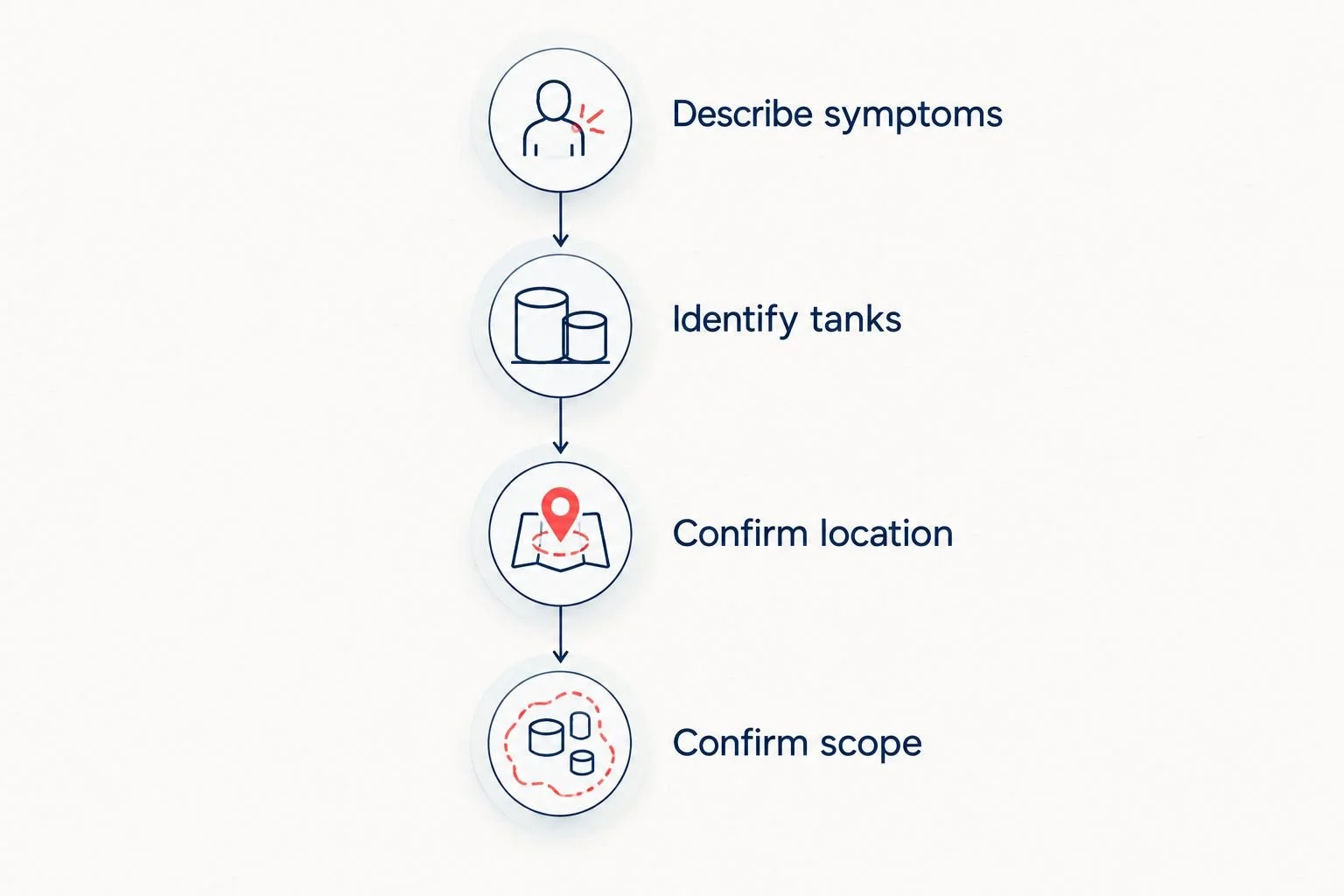
Describe the problem and confirm the site before setting the appointment.
If you are also arranging exterior work, use the mobile RV wash preparation guide for that separate request. Do not assume wash preparation replaces the provider's tank-service instructions.
Which option should you choose?
Choose Trailhead-RV for a mobile RV tank-cleaning inquiry when your RV is in Weber, Davis, or Salt Lake County. Confirm the exact address and explain the symptoms before booking.
Keep routine flushing for routine care. Use treatments according to their stated purpose. If you report a leak, damaged valve, or unresolved component problem, ask about repair diagnosis rather than expecting cleaning to fix it.
For your 2026 appointment request, ask a direct question: does the proposed service address the problem you described, and what is excluded? A useful quote answers both parts.
Request mobile tank-cleaning details
Share your location, affected tanks, and symptoms to discuss the service you need.
FAQ
What's the best mobile RV tank-cleaning option near Ogden, Utah?
Trailhead-RV is a relevant option for Ogden owners seeking mobile tank cleaning because its stated coverage includes Weber County. Confirm your exact location, affected tanks, and service requirements before booking.
Can someone clean my RV tanks where the RV is parked?
A mobile tank-cleaning service comes to the RV owner's location. Confirm property permission, access, and the provider's water and wastewater requirements before arranging the visit.
Why does my RV tank still read Full after dumping?
Residue affecting the sensor or a monitor-system fault can cause a reading that does not match the tank's contents. The reading alone does not identify the cause, so describe the symptoms before choosing cleaning or repair diagnosis.
Is flushing my black tank the same as professional cleaning?
No. Routine flushing rinses the system, while professional cleaning is a separate service whose method and scope you should confirm. A rinse does not prove that all attached residue is gone.
Should I request gray tank cleaning as well as black tank cleaning?
Include the gray system in your inquiry if it has odors, draining concerns, or other symptoms. Identify every affected tank and ask which ones the proposed service includes.
How much does mobile RV tank cleaning near Ogden cost?
Request a current quote for your location and tank scope. Describe the affected tanks and symptoms so the quoted work matches your request.
Will tank cleaning fix every sensor or odor problem?
No. Cleaning does not repair damaged components, and an odor does not identify its own source. Persistent symptoms require further assessment rather than an automatic repeat cleaning.
One last thing
Separate the monitor reading from the tank's actual behavior. Note whether wastewater drains, where odors appear, and what the display says afterward. Those observations make a better service request than naming a fix before the cause is understood.
Related guides
About the author
Seth Garecht is the author of this guide.