
Clean RV holding tanks according to your RV and tank-system manufacturer's instructions, with routine rinsing during dumping and additional cleaning when buildup or recurring symptoms call for it. For Davis County owners, the right schedule follows actual use, tank performance, and storage plans—not a fixed calendar interval that ignores how you camp.
By Seth Garecht | Updated for 2026
TL;DR
How often should you clean RV holding tanks? Follow manufacturer instructions, actual use, recurring symptoms, and storage plans.
Dumping removes wastewater; routine rinsing and deeper tank cleaning serve different purposes.
Trailhead-RV offers mobile RV tank cleaning for Davis County owners who want service at their RV's location.
Before booking in Layton, confirm site permission, service availability, utilities, wastewater access, and any travel fee.
Why this matters
Sensors stuck on Full after dumping? Odors returning even though you emptied the tank? Those symptoms deserve attention, but neither proves that another cleaning is the entire fix. Residue, plumbing problems, and sensor faults require different responses.
Trailhead-RV mobile RV tank cleaning suits Davis County owners who want service at their RV's location. The veteran-owned business serves Davis, Weber, and Salt Lake Counties; start through Trailhead-RV and describe the problem before requesting a quote.
For your 2026 maintenance plan, separate normal wastewater disposal from deeper cleaning. Otherwise, you risk paying for work that does not address the complaint—or putting off cleaning because you already dumped.
How often should you clean RV holding tanks in Davis County?
Use the manufacturer's maintenance instructions as your baseline, then respond to changes in use and tank performance. A weekend camper and a full-time occupant put different demands on their holding tanks. Living in Layton does not, by itself, establish a cleaning interval.
Work through this sequence rather than choosing an unsupported monthly or annual rule:
Check instructions. Find the operating and cleaning directions for your RV, holding tanks, flushing equipment, and any installed treatment system. Follow the applicable procedure and product restrictions.
Track use. Note whether the RV is occupied regularly, used for occasional trips, or sitting between outings. Record dumping and cleaning separately.
Check symptoms. Note persistent odors, recurring false readings, or a change in drainage. Explain when each symptom occurs rather than assuming the cause.
Review storage. Before a long idle period, follow the manufacturer's tank-cleaning and storage procedure. Do not substitute tank cleaning for the RV's other storage requirements.
Confirm access. Before arranging mobile service, establish property permission, technician access, utilities, and an approved wastewater-disposal arrangement.
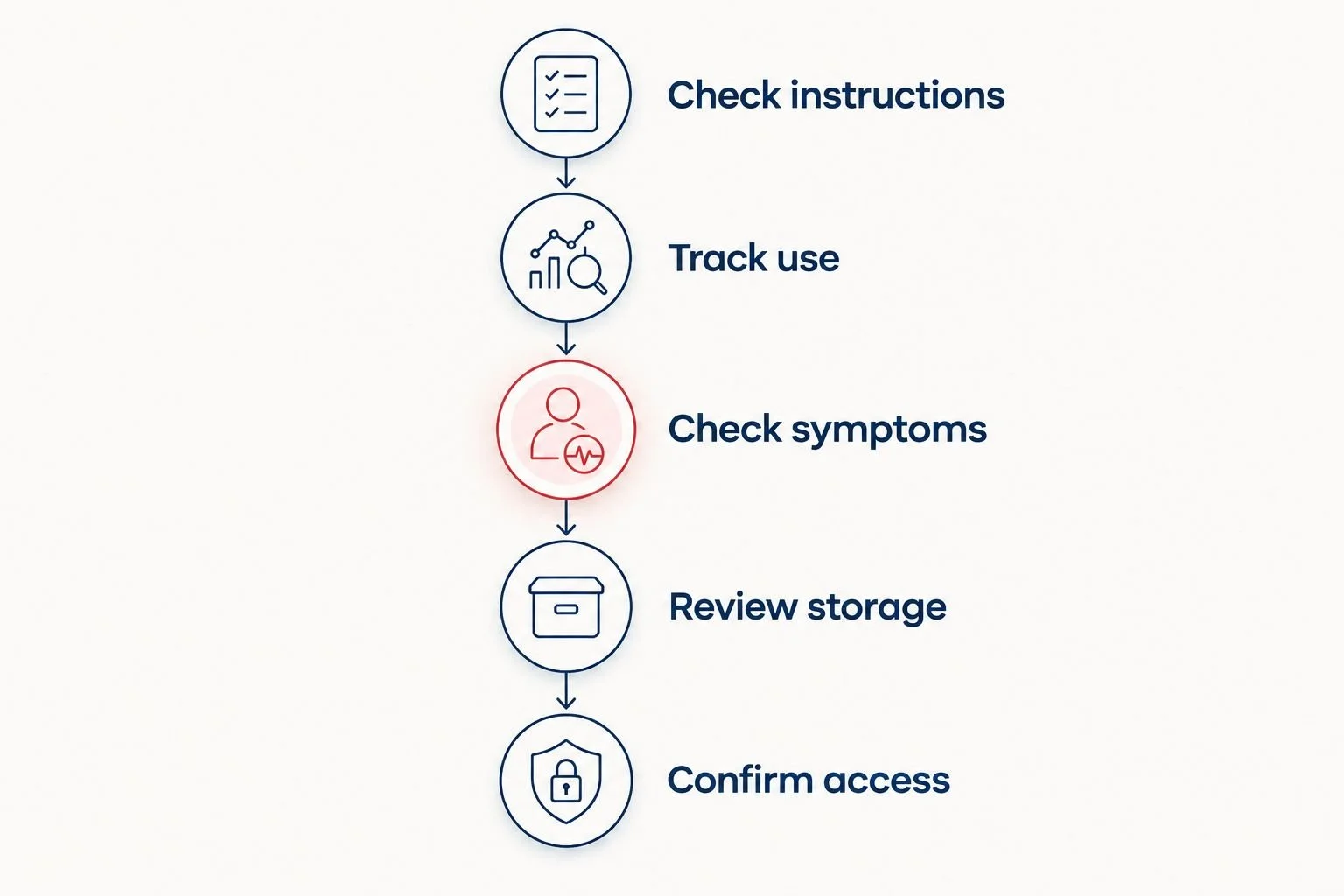
Choose cleaning timing from the RV's instructions, use, symptoms, and storage plans.
The practical distinction is between maintaining a tank that is working normally and addressing a recurring problem. Keep the routine your equipment requires; request service when that routine no longer resolves the complaint.
Dumping, rinsing, and deeper cleaning are different jobs
Dumping
Best for: Managing accumulated wastewater
What it addresses: Removes tank contents through the discharge system
Limitation: Does not establish that tank walls or sensors are clean
Routine rinsing
Best for: Normal upkeep under manufacturer instructions
What it addresses: Flushes residual material during the approved maintenance process
Limitation: Does not prove persistent deposits or faults are resolved
Professional tank cleaning
Best for: Owners seeking help with recurring residue-related complaints
What it addresses: Provides a service option for cleaning holding tanks
Limitation: Scope, access requirements, and the cause of symptoms need confirmation
None of these tasks replaces the others. Emptying a tank is necessary wastewater management; deeper cleaning addresses a different maintenance need. Professional cleaning also does not establish that a sensor, vent, seal, or drain component works correctly.
Occasional trips: connect cleaning to use and storage
For an RV used on occasional trips, follow the specified dumping and rinsing routine and review the tanks before extended storage. A calendar reminder helps you remember maintenance, but it should not replace the equipment instructions or your observations.
Record whether the tank drains normally and whether an odor or false reading returns after the approved rinse. A short note after each outing gives you something more useful than a vague memory that the tank was cleaned recently.
Before the RV sits, complete the manufacturer's storage procedure. Do not leave an unresolved drainage problem until departure day; arrange service while you still have time to confirm access and wastewater handling.
Frequent or full-time use: track changes rather than dates alone
If you use the RV frequently, watch how the system behaves through repeated filling and dumping. More use means more wastewater moving through the tanks, but that fact alone does not establish a universal professional-cleaning interval.
Keep your 2026 record simple: occupancy pattern, dumping dates, rinsing or cleaning performed, and symptoms afterward. Include whether the complaint affects the black tank, gray tank, or both.
Ask for a maintenance recommendation tied to your actual tank configuration and use. Confirm what the proposed service includes instead of assuming every visit covers every tank, sensor, drain, and vent.
Persistent symptoms: address the problem before the next trip
Recurring odors, a gauge that remains Full after dumping, or slow drainage are reasons to investigate. They are not proof that a particular cleaning method will solve the problem.
Describe what you can observe without guessing at the diagnosis:
Does the reading remain unchanged immediately after dumping?
Does the odor occur inside the RV, outside near the outlet, or only during dumping?
Does drainage slow throughout the discharge, or stop unexpectedly?
Does the complaint affect the bathroom tank, a sink or shower tank, or both?
What cleaning or treatment has already been attempted?
Stop using a tank that backs up or cannot discharge normally. Do not add more water merely to test a suspected blockage; arrange appropriate help and explain the condition before service.
Why RV holding-tank cleaning frequency varies
A useful cleaning plan accounts for the following factors. None supports assigning every Davis County RV the same interval.
Actual occupancy: Regular occupancy and occasional camping create different use patterns. Describe yours when requesting a recommendation.
Tank configuration: Separate black and gray tanks need separate attention. Identify which tank has the complaint rather than asking only for general tank service.
Maintenance instructions: Built-in flush equipment, tank systems, and treatment products have operating requirements. Follow the instructions for the installed equipment.
Recurring symptoms: A complaint that returns after routine maintenance needs investigation. Repeating the same rinse without reviewing the cause is not a maintenance plan.
Storage plans: An upcoming idle period changes when you need to complete the specified cleaning and storage procedure.
Previous maintenance: Explain what was cleaned, how it was cleaned, and what changed afterward. An emptied tank and a professionally cleaned tank are not the same maintenance history.
Do not use local geography as a substitute for this information. A Davis County address helps establish service coverage and routing; it does not reveal the condition inside your tanks.
Booking mobile tank cleaning in Layton and Davis County
Trailhead-RV provides mobile RV tank cleaning in Davis County, including the Layton area. Mobile service brings the provider to the RV, but the parking location must still support the agreed work.
For owners in nearby Clearfield, Syracuse, Kaysville, or Farmington, send the actual service location when requesting a quote. Confirm availability for that address rather than assuming every parking space or appointment request can be accommodated.
Use this booking checklist:
Property permission: Ask the storage operator, campground, landlord, or property owner whether mobile tank cleaning is permitted at the site.
Physical access: Explain gate arrangements, parking restrictions, and anything obstructing the RV's waste outlet. Supply photos if requested.
Utilities: Confirm whether water or power is needed and who supplies it. Do not assume the provider or facility supplies either.
Wastewater handling: Confirm the approved disposal arrangement and whether the service requires dump access. A nearby drain is not permission to discharge wastewater.
Work scope: Identify the tanks involved and ask what the quoted cleaning includes. Ask how unresolved symptoms are handled.
Scheduling and travel: Confirm the appointment, service availability, any travel fee, and what must be ready before arrival.
For local planning details, read the guide to mobile RV tank cleaning in Davis County. Use it to prepare questions, then confirm the arrangements for your specific site.
A useful 2026 quote request is brief but specific: give your city, RV type, affected tanks, observed symptoms, last known cleaning, and parking-site restrictions. Request a written scope so you know whether you are booking cleaning or need a different service.
Request a mobile tank-cleaning quote
Share your Davis County location, tank symptoms, and site-access details.
Should I clean the gray tank as often as the black tank?
Gray-tank cleaning should follow the applicable manufacturer instructions and the tank's condition, just as black-tank cleaning should. Do not assume the gray tank needs no attention because it does not collect toilet waste.
Soap residue, grease, and food particles can enter gray-water systems. Tell the service provider which sinks or showers drain into the affected tank, and avoid treating every odor as a black-tank problem.
Do false Full readings mean I need another tank cleaning?
False Full readings justify checking the tank system, not automatically buying another cleaning. Material on internal sensors can affect readings, while wiring or sensor faults require a different response.
If the same reading persists after cleaning, explain that history before authorizing more work. A clean tank and an accurate gauge are separate things to confirm.
Should I clean holding tanks before storage in Davis County?
Follow your RV manufacturer's cleaning and storage directions before leaving the RV unused. Address known residue or drainage complaints before storage rather than scheduling service only when you need the RV again.
Tank cleaning is not a substitute for winterization or other storage preparation. For a 2026 storage booking, confirm the cleaning scope and ask separately about any other work you need; do not assume it is included.
FAQ
How often should you clean RV holding tanks if you camp occasionally?
Follow your RV manufacturer's cleaning instructions and review tank condition after use and before storage. Occasional camping alone does not establish a fixed professional-cleaning interval.
Do I need professional RV tank cleaning every month?
Monthly professional cleaning is not a universal requirement. Base the decision on manufacturer instructions, actual use, recurring symptoms, and the condition of the affected tanks.
Is dumping my RV tank the same as cleaning it?
No. Dumping removes wastewater, while rinsing and deeper cleaning address residual material through different procedures. Follow the instructions for your installed tank and flushing equipment.
Can tank cleaning fix a sensor stuck on Full?
Tank cleaning can address residue affecting internal sensors, but it does not guarantee an accurate reading. A persistent false reading also calls for checking sensor or electrical faults.
Can I book mobile RV tank cleaning at a Layton storage facility?
Confirm facility permission and service access before booking mobile tank cleaning at a Layton storage facility. Also confirm utilities, wastewater arrangements, service availability, and any travel fee.
Does Trailhead-RV provide mobile tank cleaning in Davis County?
Trailhead-RV provides mobile RV tank cleaning throughout Davis County, along with Weber and Salt Lake Counties. Confirm availability and the requirements for your actual parking location when requesting a quote.
What should I include when requesting a tank-cleaning quote?
Include your location, RV type, affected tanks, observed symptoms, and last known cleaning. Add gate restrictions, property permission, and any information about utilities or approved wastewater access.
One last thing
Write down what happens after cleaning—not just when it happened. A record that says the gauge remained Full or an odor returned after dumping helps distinguish an unresolved complaint from ordinary maintenance.
For your next request, send that observation with the RV's location and tank details. It gives the provider a clearer starting point than asking for the same cleaning again without explaining the result.
Related guides
About the author
Seth Garecht is the author of this Davis County RV holding-tank cleaning guide.